



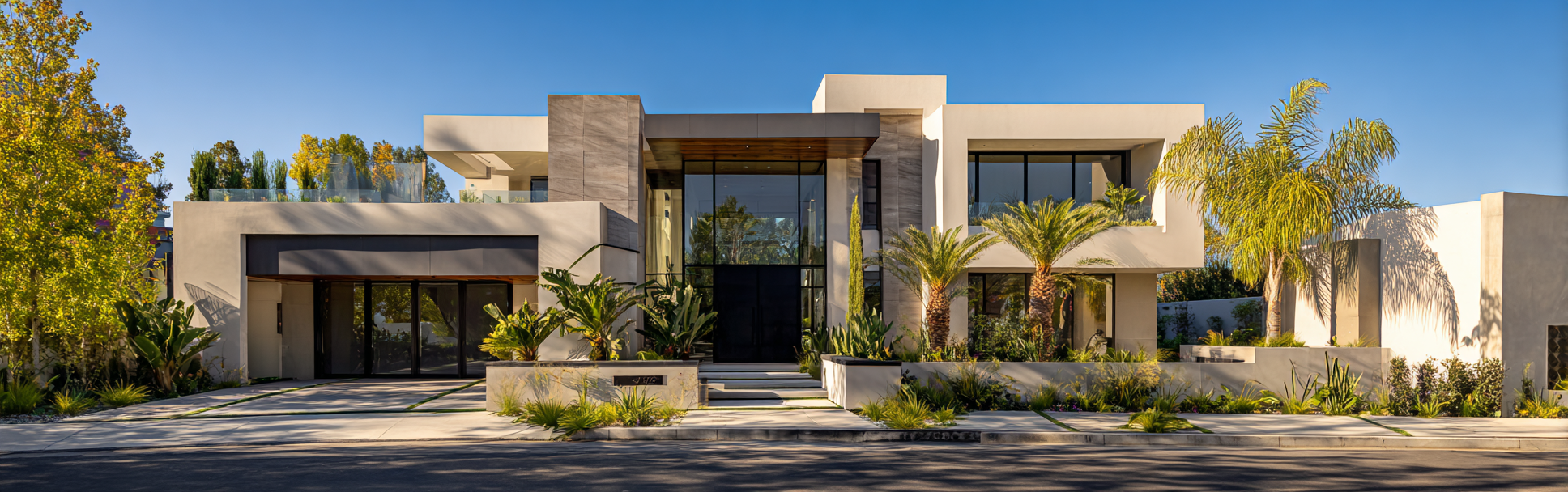
Custom Home Design in Beverly Hills
Creating architectural masterpieces in Trousdale Estates, Beverly Park, and Beverly Hills Flats with unmatched expertise in Design Review Commission approvals.
Premier Beverly Hills Neighborhoods We Serve
We specialize in the most exclusive enclaves of Beverly Hills, bringing over a decade of expertise to each unique community.
Trousdale Estates
Iconic Mid-Century Modern enclave perched in the hills with panoramic city and ocean views. We specialize in preserving architectural heritage while creating contemporary luxury.
Beverly Park
Ultra-exclusive, guard-gated community known for mega-mansions and celebrity residents. We create architectural masterpieces on multi-acre estates.
Beverly Hills Flats
Prime flatland area south of Sunset Boulevard, featuring tree-lined streets and walkability to Rodeo Drive. We design elegant residences that complement the neighborhood’s refined character.
We also serve additional Beverly Hills neighborhoods including Coldwater Canyon, Benedict Canyon, and the Bird Streets.
Why Build Custom in Beverly Hills?
Beverly Hills represents the pinnacle of luxury living. A custom-designed home ensures your property reflects this standard while maximizing your investment.

Maximize Property Value
Beverly Hills properties command premium prices. A custom design that captures views, optimizes hillside lots, and meets Design Review standards significantly enhances market value.

Prestige & Lifestyle
Create a residence that matches your status. Whether entertaining elite guests, housing art collections, or designing private wellness spaces, custom design delivers uncompromising luxury.

Architectural Legacy
Beverly Hills is home to iconic architecture by Paul R. Williams, Wallace Neff, and A. Quincy Jones. Your custom home becomes part of this distinguished architectural heritage.
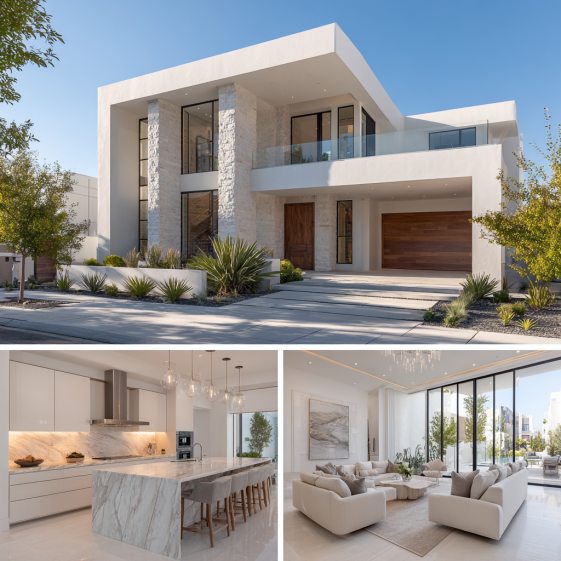
Why We Are Beverly Hills’ Premier Design Choice
Over 10+ years of proven expertise navigating Beverly Hills’ stringent architectural standards and delivering designs that exceed client expectations.
Design Review Commission Mastery
We know Beverly Hills’ Design Review process inside and out. Track 1 vs. Track 2 reviews, “pure architectural style” requirements, and Central Area regulations, we handle it all to ensure smooth, timely approvals.
Architectural Style Expertise
From Mid-Century Modern masterpieces in Trousdale to grand traditional estates in Beverly Park, we specialize in every architectural style that defines Beverly Hills ensuring authenticity and sophistication.
Design for You, Not for Profit Margins
As design specialists, we have no construction interests. Every decision prioritizes your vision, your lifestyle, and your investment never a contractor’s bottom line.
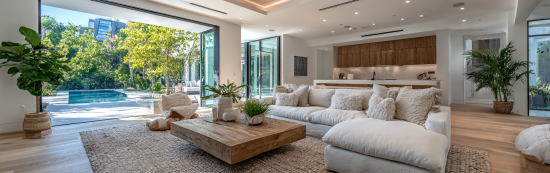
Tired of Generic Plans and Costly Redesigns?
Go Custom Homes Design in Beverly Hills
Your Path to a Custom Beverly Hills Home
From initial vision to final permit approval, we guide you through every step with transparency and expertise.
01
Schedule Your Free Consultation
We visit your property, discuss your vision, and assess lot characteristics and Design Review requirements.
02
Design Development & Refinement
We create custom designs tailored to your lifestyle, ensuring architectural authenticity and Design Review compliance.
03
Site Planning & Adaptation
We optimize your design for hillside topography, views, setbacks, and FAR limits specific to Beverly Hills.
04
Permit Processing & Plan Corrections
We navigate Design Review Commission approvals and Building & Safety permits, handling all revisions and plan checks.
05
Final Design & Delivery
You receive complete, permit-approved plans ready for construction by your chosen contractor.
Begin your custom home design journey with us, where trust, clarity, and expert craftsmanship lead every step of the way.
We Create Custom Home Plans and Designs, We Don’t Build
This distinction is your advantage. As design-only specialists, we focus exclusively on creating the perfect plans for your custom home without the conflicts of interest that come from construction ties.
Every material, every detail is chosen for your benefit not to increase construction margins.
You’re free to choose any contractor you trust, ensuring competitive bids and quality work.
Our loyalty is to your vision and investment, delivering designs that maximize value and exceed expectations.

Beverly Hills Design Excellence
A selection of our custom home designs showcasing the architectural diversity and sophistication that define Beverly Hills living.
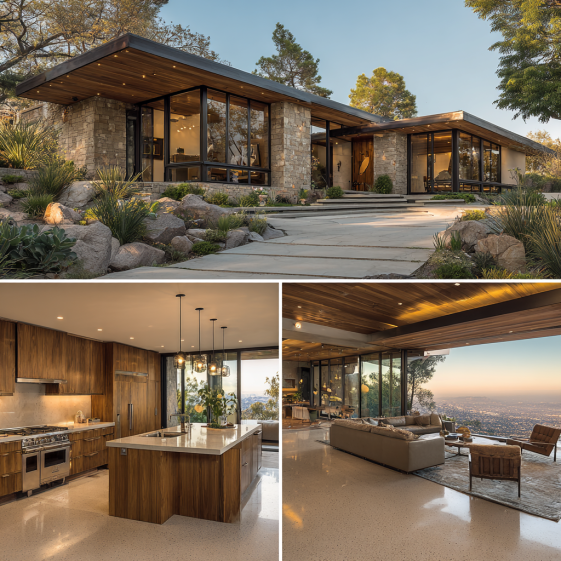
Mid-Century Modern Estate
Trousdale Estates
Sleek 6,800 sq ft residence featuring floor-to-ceiling glass, cantilevered roof planes, and seamless indoor-outdoor living with panoramic city views.
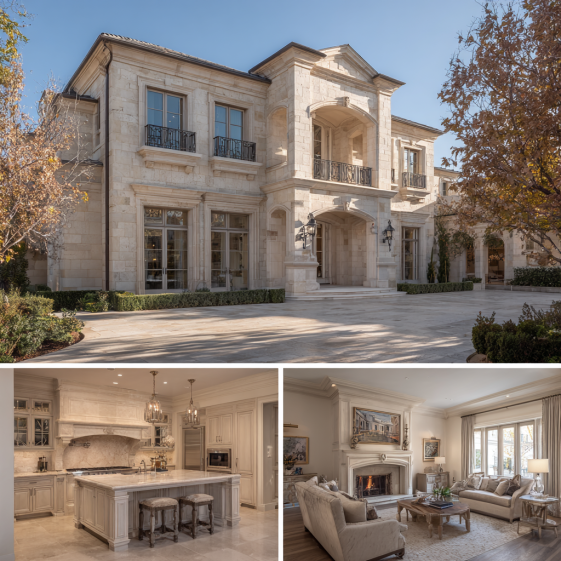
Grand Traditional Estate
Beverly Park
Majestic 14,500 sq ft mansion on 2.3 acres with formal gardens, guesthouse, and resort-style pool complex designed for elite entertaining.
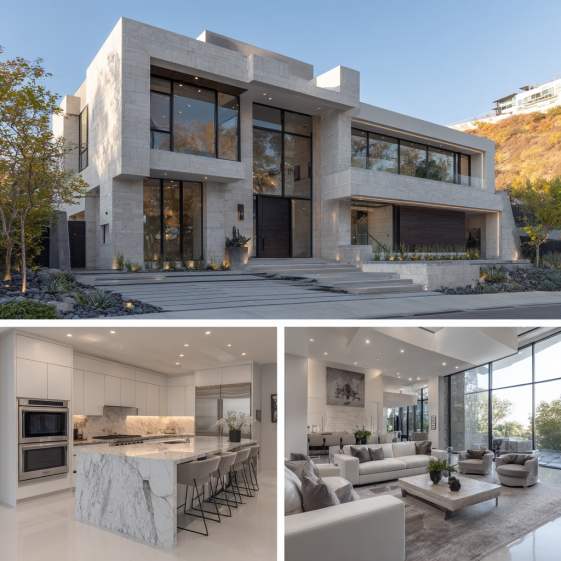
Contemporary Masterpiece
Beverly Hills Flats
Sophisticated 5,200 sq ft residence with clean lines, curated materials, and smart home integration, steps from Rodeo Drive.
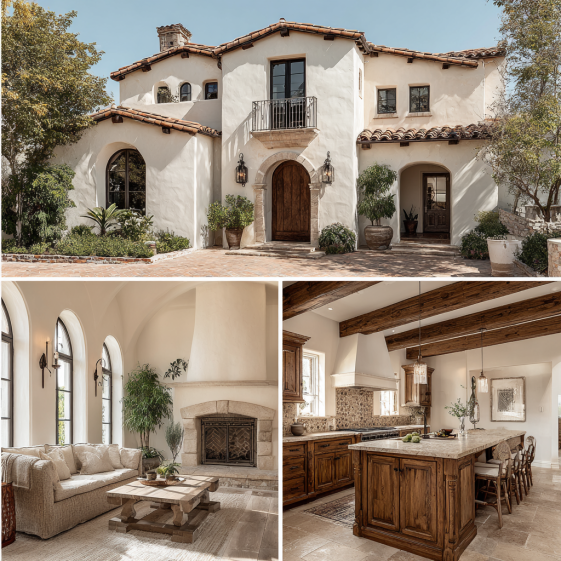
Spanish Colonial Revival
Beverly Hills Central
Timeless 7,100 sq ft estate with authentic Spanish details, interior courtyards, and hand-crafted wrought iron throughout.
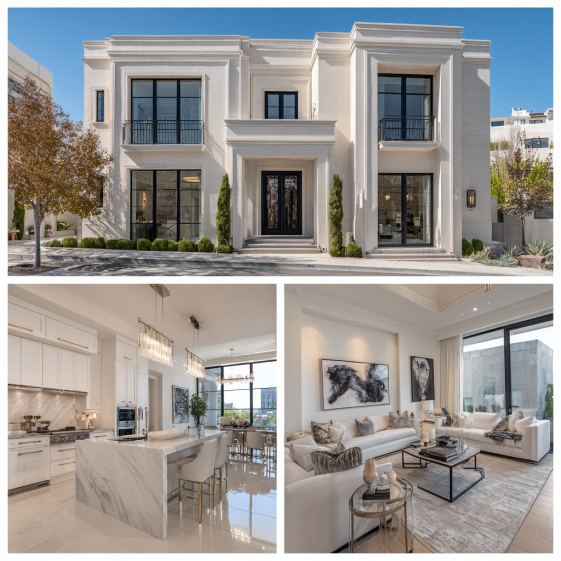
Hollywood Regency
Trousdale Estates
Glamorous 5,900 sq ft residence celebrating Old Hollywood elegance with modern luxury amenities and breathtaking sunset views.
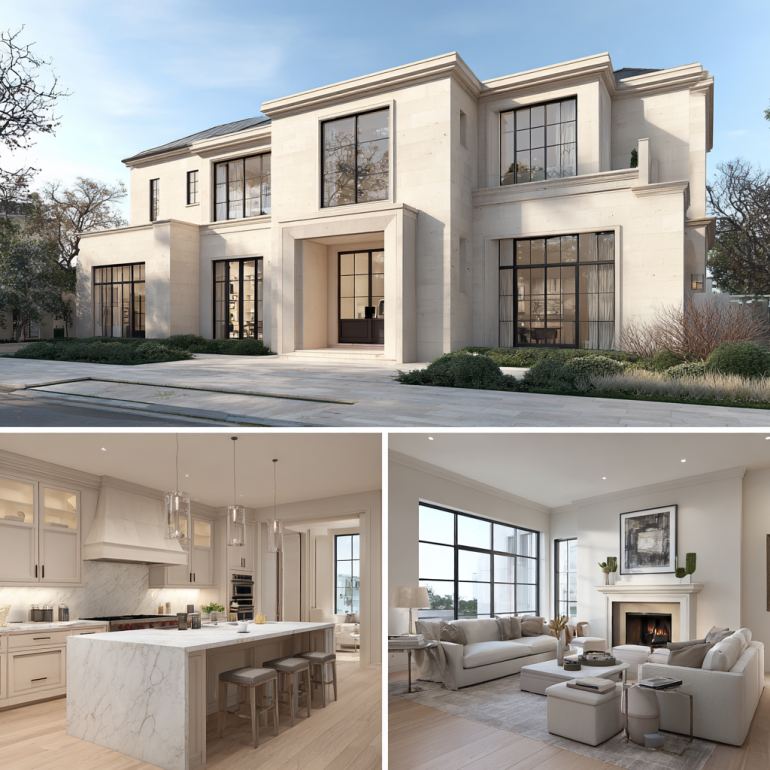
Transitional Estate
Benedict Canyon
Refined 8,400 sq ft home blending traditional warmth with contemporary sophistication, featuring wine cellar and home theater.
*Due to client privacy preferences, specific addresses and interior details are not disclosed. All designs are custom-created for individual clients and reflect their unique vision.
Custom Home Design Questions About Building in Beverly Hills
Is Beverly Hills a good place to build a custom luxury home?
Beverly Hills is world-renowned for its luxury and exclusivity, making it an ideal place to build a custom high-end home. The city offers a blend of prestige, safety, and upscale amenities that few other areas can match. As one of the most expensive real estate markets in the world, property values here are very strong – for example, as of late 2024 the median home price in Beverly Hills was over $3.5 million (nearly triple the broader Los Angeles median). This high demand and limited inventory mean that a well-designed custom home in Beverly Hills can be a wise investment. You’ll be surrounded by other luxury properties and neighbors who include celebrities and industry leaders, and have access to top-tier shopping, dining, and services right in town. Beyond the prestige, Beverly Hills also has a close-knit community feel and excellent public services (police, schools, etc.), which add to its desirability. In short, building a custom home here means enjoying a glamorous lifestyle in a location that consistently holds its value.
What makes custom home design in Beverly Hills different from other cities?
Custom homes in Beverly Hills tend to be more elaborate and tightly regulated than in many other places. First, the architectural diversity and level of luxury in Beverly Hills are exceptional – you’ll see everything from historic Spanish Colonial Revival estates to cutting-edge contemporary mansions, often on the same street. Designing a home here means you can draw from this rich palette of styles and must meet a very high bar for quality and amenities, since the market expects the best of the best. Secondly, local regulations shape design in ways that differ from elsewhere. Beverly Hills has strict zoning laws and planning codes that control what you can build: there are minimum lot sizes (often 6,000+ sq ft in residential zones, even larger in hillside areas), setback requirements, height limits, and floor area ratio caps that limit the home’s size relative to the lot. This means a custom design in Beverly Hills often requires creative architecture to achieve the owner’s vision while staying within those rules. For example, architects might incorporate subterranean levels (basements) for added space, since those don’t always count toward the size limits, or design lower-profile rooflines in hilly areas to comply with height restrictions. Finally, the expectations of luxury buyers in Beverly Hills drive unique design features – amenities like home theaters, wellness centers, smart-home technology, lavish outdoor living areas, and bespoke materials are common in Beverly Hills custom homes (more so than in a typical city). All these factors make designing in Beverly Hills a specialized endeavor: it requires balancing opulent, one-of-a-kind design with compliance to some of California’s most stringent building regulations and community standards. The result, when done right, is a home that is truly distinctive and suited to the Beverly Hills lifestyle.
Why should I hire a custom home architect in Beverly Hills instead of using standard house plans?
Building in Beverly Hills is a significant investment, and a custom home architect is crucial to getting it right. Off-the-shelf stock plans may be cheaper upfront, but they are generic and often not optimized for local conditions or codes. In Beverly Hills, a custom architect will ensure your home design meets the city’s specific zoning and building requirements from the outset – avoiding costly revisions later. (Stock plans usually must be heavily modified by a local professional to even pass plan check here. ) An experienced Beverly Hills architect will design a home that fits your specific lot (taking into account its shape, topography, and view corridors) and your lifestyle. They’ll also know how to navigate Beverly Hills’ permitting process and any design review procedures, saving you time and headaches. In a high-end market like this, there’s also the matter of adding value: a unique, architect-designed home in Beverly Hills will have more market appeal and cachet than a cookie-cutter plan that might be found in any suburb. Stock plans can’t capture the customized luxury details or the level of craftsmanship that Beverly Hills buyers expect. In short, using a standard plan risks under-utilizing your expensive land and running into compliance issues, whereas hiring a skilled custom home architect means your Beverly Hills home will be one-of-a-kind, maximizes the property’s potential, and sails through the city’s approval process. It’s an upfront investment that pays off in a smoother build and a superior home in the long run.
How much does it cost to design a custom home in Beverly Hills?
The design phase of a custom home (which includes hiring an architect and necessary engineers) typically costs a percentage of the construction budget. In practice, many architects charge somewhere around 5% to 15% of the expected construction cost for full services, depending on the project’s complexity and the scope of their work. . High-end projects in Beverly Hills, with extensive detailing and coordination, might be on the higher end of that range. For example, if you plan a $5 million construction, the architectural design fees could be in the ballpark of $250,000 to $750,000. Some luxury architecture firms might even approach ~20% for very complex, large estates, though that often includes engineering and specialty consultants as well.
Another way to look at it: custom architectural and engineering services are often quoted as part of “soft costs” for the project. In Beverly Hills, one builder notes that architecture and engineering together tend to run 8–20% of construction costsThis would cover creating all the custom plans, structural engineering, MEP (mechanical, electrical, plumbing) plans, and handling the city’s plan check process. So, on a major project (say a $10M build), the design phase could be $800k+ in fees. On smaller projects, architects might alternatively charge a fixed fee or hourly, but percentage is common for custom homes.
Remember other design-related costs too: you’ll pay for surveys or soils reports, possibly an interior designer, and city permitting fees (which are separate from architect fees). Those permits and reviews in Beverly Hills can add tens of thousands of dollars (for example, building permit and plan check fees could be on the order of $30k–$50k+ for a large new home). In summary, designing a custom home in Beverly Hills is a substantial but crucial expense – roughly on the order of tens (or hundreds) of thousands of dollars, reflecting the intensive work needed to craft a bespoke home and get it approved in this city.
What is the average cost per square foot to build a custom home in Beverly Hills?
Construction costs per square foot in Beverly Hills are well above the national average due to the level of luxury and expensive labor/materials in Los Angeles. For a high-end custom home in Beverly Hills, you’re generally looking at something in the range of $500 on the very low end, to $800+ per square foot for many projects, and in ultra-luxury cases even over $1,000 per sq. ft. is possible. The exact number depends on the quality of finishes and complexity:
- – At ~$500/sqft: This might be achievable for a more modest custom build or a home with more standard luxury finishes (still very nice, but not the absolute top-tier everything).
- – Around $800/sqft is common for a true luxury custom home with high-end materials and features. In fact, local builders note that high-end construction in Beverly Hills often averages $800–$1,200 per square foot when you factor in all the lavish amenities, custom cabinetry, import stone, etc. At $1,000/sqft, a 5,000 sq. ft. home would cost about $5 million to build (construction only).
- – The most extravagant estates (think mega-mansions with every luxury amenity) can exceed $1,200/sqft, especially once you include extensive landscaping, pools, and specialty work. For instance, one guide noted that with top-notch finishes, smart home tech, and opulent amenities, Beverly Hills mansions easily push into that range.
It’s also worth noting that site conditions can affect this cost. If your lot requires significant grading, retaining walls, or other challenges, that adds to the effective cost per foot. Conversely, a flat lot where building is straightforward might stay toward the lower end of the range. But overall, a ballpark “average” for a custom luxury home in Beverly Hills might be roughly $700–$1,000 per square foot, reflecting the premium nature of building here. This is considerably higher than the cost in many other cities, but it aligns with the quality and market value of Beverly Hills real estate.
How do I budget for a custom home design project in Beverly Hills?
Budgeting for a custom home in Beverly Hills means accounting for everything – not just the build itself, but also the soft costs and cushions needed for a complex project. A good approach is to break your budget into major categories and assign realistic figures to each. Here are the key components to include:
- – Land Acquisition: If you haven’t already purchased your lot, this will be a major cost. Beverly Hills land is extremely pricey – often on the order of $800–$1,500 per square foot of land
- – The full build of a custom home in California often ranges 12–18 months or more from design to completion. For example, a 10,000 sq. ft. lot could easily cost on the order of $8–10 million (or more in a prime location) just for the dirt. This, of course, sets the baseline for your overall budget. If you already own the property, consider the equity as part of your budget resources.
- – Construction Costs: Determine a rough cost per square foot for the type of home you plan to build (as discussed above). For instance, if you anticipate ~5,000 sq. ft. at $700/sqft, that’s $3.5 million for construction. It’s wise to err on the higher side for Beverly Hills. Don’t forget to include site work costs in this number – things like grading, foundations, retaining walls, and utility connections. Particularly for hillside lots, site preparation can add significant cost (sometimes easily $100k–$300k for grading, soil tests, and structural supports on challenging terrain).
- – Design and Engineering Fees: Allocate around 8–15% of your construction cost for architecture and engineering services (plans, structural engineering, etc.). For example, a $4M build might have $400k or so in design fees. Highly complex projects might go above this range. Include interior design in this category if you plan to engage a designer for detailed interiors.
- – Permits and City Fees: Building in Beverly Hills comes with considerable permitting costs. The city’s plan check and permit fees for a large custom home can easily total tens of thousands of dollars – often $30,000 to $50,000+ just in city permits for new construction. Additionally, there are often fees for school districts or utilities. Don’t forget utility connection fees: connecting to sewer, water, electrical, etc., which in BH could be another $20k–$40k (for example, sewer hookup alone might run into the five figures here).
- – Site Preparation & Extras: Set aside budget for demolition (if there’s an old structure to remove), environmental tests, and any special issues. As mentioned, hillside builds may need significant investment in earthwork or retaining walls. You might also budget for landscaping, hardscaping, pools, fences, and other exterior features under this category.
- Contingency: This is very important. It’s recommended to include at least a 10–20% contingency on top of the above costs. Construction in Beverly Hills (or anywhere) can bring surprises – perhaps you hit groundwater when digging, or material costs rise, or you decide to upgrade something mid-project. A contingency ensures you have a financial buffer so that these surprises don’t derail the project. Many homeowners set aside a healthy contingency (for example, if your calculated total for everything is $5M, you might add $500k+ as contingency).
By adding all these components, you’ll get a comprehensive budget. For example, a hypothetical breakdown for budgeting might be: Land $X million, Construction $Y million, Soft Costs (design/permits) ~$Z hundred-thousand, Extras $W, Contingency ~15%. It helps to work closely with both an architect and builder during budgeting – architects can do preliminary design within a budget, and builders (or cost estimators) can provide input on what the construction might actually cost in current market conditions. In Beverly Hills, careful budgeting is crucial; costs can escalate quickly if not planned, so the more detailed and realistic your budget, the smoother your project will go
What factors affect the cost of custom home design in Beverly Hills?
Several factors will influence how much your custom home ends up costing in Beverly Hills. Here are the major ones to keep in mind:
- – Location and Site Conditions: In Beverly Hills, whether your lot is flat or on a hillside will have a big impact on cost. Hillside construction is generally more expensive – you may need extensive grading, retaining walls, caissons or deep foundations, and engineering to address slope stability. Also, if your lot has difficult access (common in the hills, where roads are narrow) construction logistics can cost more. Even within the flats, a larger lot means more potential landscaping or longer utility runs. Location can also dictate if special measures are needed (for instance, properties in high fire hazard zones might require fire-resistant materials, etc., adding cost).
- – Home Size and Complexity: Simply put, a bigger house costs more. But beyond square footage, the complexity of the design matters. A straightforward rectangular floor plan will generally be cheaper to build than one with unusual shapes, multiple wings, cantilevers, or intricate architectural details. High ceilings, long-span rooms, or complex rooflines also drive costs up due to the extra structural needs. The number of levels (stories) can affect cost too – e.g., a basement adds excavation and structural expense. In Beverly Hills many luxury homes include expansive basements (sometimes with theaters, gyms, etc.), which can be costly square footage.
- – Level of Finishes and Materials: This is a huge factor. Beverly Hills custom homes often use top-of-the-line materials – think imported stone countertops, custom-milled hardwood floors, high-end appliances, specialty hardware, etc. These can dramatically increase cost per square foot. For example, choosing a $200,000 kitchen versus a $50,000 kitchen will change the budget. Luxury fixtures (plumbing, lighting) and finishes (tile, plaster, woodwork) come at a premium. Even structural materials: using steel beams to create large open spaces, or a high-end window system (large format sliding glass doors, etc.) will up costs. Essentially, bespoke and premium = higher cost.
- – Amenities and Special Features: Many Beverly Hills customs include deluxe amenities that add cost – home theaters with professional AV, wine cellars, elevators, spa-like bathrooms, smart home systems, etc. Each of these features can be tens of thousands of dollars (or more). Outdoor amenities count too: pools or infinity pools, outdoor kitchens, elaborate landscaping with hardscape features, sport courts, etc., all significantly affect the budget. A recent analysis noted features like resort-style pools, smart home tech, spa bathrooms as value-adds that also add to upfront cost. Every extra custom feature (say, a subterranean 10-car garage or a safe room) will require budget allocation.
- – Regulatory Requirements and Permits: Complying with codes can influence costs. For instance, Beverly Hills (following California codes) requires things like fire sprinklers in new homes, solar-ready roofs, Title 24 energy efficiency standards – all of which have costs associated. If your design triggers additional reviews (say, an environmental impact report or special soil mitigations), that can introduce professional fees and construction modifications. Permit fees themselves, while not huge relative to construction, do add to cost (as mentioned, potentially tens of thousands for big projects) – effectively, they are a “cost of doing business” in BH. Also, the process can cause delays, and delays can mean higher costs if your construction schedule extends (labor and financing costs can increase).
- – Construction Market Conditions: It’s worth noting that factors like labor and material costs in the Los Angeles area will affect your budget. Beverly Hills projects use the same pool of contractors as greater LA, and currently LA construction costs have been high due to demand, labor shortages, and material price inflation. Key building materials have seen price increases (lumber, steel, concrete, etc. have been 20%+ higher than historical norms in recent years). Skilled labor in LA is also expensive and sometimes in short supply, which drives up bids. These market factors can fluctuate, but in general Beverly Hills, as a high-end location, tends to attract top contractors who charge premium rates, and you’ll want to pay for quality workmanship, which affects cost.
In summary, every aspect from the ground (site) up to the roof and the luxury extras inside will affect your custom home’s cost. By understanding these factors, you and your project team can make informed choices about where to splurge and where to save to meet your budget.
Does a custom-designed home increase property value in Beverly Hills?
In Beverly Hills, a well-executed custom-designed home absolutely can boost property value – often significantly. Buyers in this market pay a premium for unique, high-quality homes. Recent trends have shown that Beverly Hills properties overall appreciate around 8–10% annually, which is roughly double the broader Los Angeles rate. Within that, a custom home (especially one designed by a noted architect or packed with desirable features) can command an even higher price per square foot than an average home. Custom homes are often effectively turn-key for luxury buyers, with no expense spared, and thus attract strong demand.
There are a few reasons for this value boost. First, custom homes in Beverly Hills typically include the latest design features and amenities that high-end buyers want – for example, gourmet showpiece kitchens, resort-like pools and outdoor living areas, spa-grade bathrooms, advanced home automation, etc. These features not only make the home more enjoyable but also more marketable. Luxury real estate agents note that upgrades blending comfort, technology, and luxury (like smart home systems, designer kitchens, and wellness amenities) offer some of the best return on investment in resale value, because buyers will pay more for a house that already has them.
Secondly, architectural uniqueness adds value. A custom design means your home isn’t a cookie-cutter; if it’s aesthetically impressive, it can become a landmark property. Beverly Hills has many examples where an architect-designed home became highly sought-after. In fact, architect-designed homes in this area are known to command premium pricing and appreciate faster than standard builds. They’re seen as collectible assets, almost like art.
It’s also worth mentioning that because land is so valuable in Beverly Hills, maximizing the potential of a lot with a custom build often makes financial sense. For instance, if someone tears down an older small house and builds a custom luxury home, the property value can jump dramatically – not just covering construction costs but yielding profit, provided it’s done wisely. A custom home tailored to the lot (and neighborhood) will fully capitalize on the location’s value (whereas an oddly designed or out-of-place house might not).
Of course, one must avoid over-improving beyond what the neighborhood can support (in Beverly Hills, this is usually not a problem, since the “ceiling” values are very high). And quality matters: a custom home that is poorly designed might not see as much benefit. But generally, in Beverly Hills, investing in a custom home means you’re likely enhancing your property’s value substantially – you’re essentially creating a one-of-a-kind luxury product in a market that highly prizes such individuality and quality.
What is the cost difference between a custom home and a remodeled home in Beverly Hills?
Comparing a brand-new custom build versus a major remodel in Beverly Hills, building new is typically more expensive overall, but it gives you a completely new house. A remodel can be cheaper, but the gap isn’t always as wide as one might think, especially for large-scale luxury renovations.
On a per-square-foot basis, new construction in Beverly Hills might run, say, $600–$1000+ per sq. ft. as discussed. A whole-home luxury remodel, by contrast, could be on the order of a few hundred dollars per sq. ft. – often in the range of $150 to $350 per sq. ft. in Los Angeles for extensive renovations. In upscale Beverly Hills cases, high-end remodels (down-to-studs, all new finishes and systems) tend toward the upper end of that range (even $400–$500/sqft for interior remodel work isn’t unheard of). So, you might be looking at roughly half (or less) the cost per foot to remodel versus to build new, in theory.
However, there are important caveats:
- – Scope of remodel: A light remodel (cosmetic updates, maybe a couple rooms) will be far cheaper than building new. But a full remodel that involves moving walls, replacing electrical/plumbing systems, adding space, etc., starts approaching new-build costs. For example, a “luxury gut renovation” where you strip a house to the shell and rebuild the interiors could easily be in the high hundreds of dollars per sq ft. Sometimes homeowners find that a major remodel comes within 20-30% of the cost of building new, yet still involves compromises (like working around an old structural layout). That leads many to just opt for new construction if the existing home isn’t historically significant.
- – Value and design: A custom new home gives you total freedom to design the layout and style you want, and it will be built to the latest codes (brand new foundation, seismic standards, energy efficiency, etc.). It often has a higher end-value because everything is new. A remodeled home, while improved, may still have some inherent limitations (such as an older structural design, or certain rooms you couldn’t expand due to the existing framework). In Beverly Hills, new construction generally fetches a premium on the market over older homes, so from an investment standpoint the custom build can pay off in higher value (though it cost more to create).
- – Hidden costs: Remodeling projects can have surprises – e.g., discovering you need to replace old electrical throughout, or finding hidden structural damage. These can make the remodel budget balloon. New construction has more predictable costs (you know you’re replacing everything). On the flip side, new construction has costs like demolition of the old structure and possibly higher permit fees for new builds versus a remodel. In Beverly Hills, demolition permits and hauling fees add to the new-build side of the ledger, whereas a remodel might avoid some of that.
Ballpark example: Let’s say you have an older 3,000 sq. ft. house in Beverly Hills. A comprehensive luxury remodel might cost on the order of $1 – $1.5 million (e.g. ~$300–$500 per sq ft) depending on what you do. Building a brand-new 3,000 sq. ft. custom home could easily be $2.5+ million (e.g. ~$800+ per sq ft). So initially it sounds like the remodel saves a lot. But if your existing home has major constraints, the new home might allow you to, for instance, go bigger (maybe you build 5,000 sq ft with a second story), which changes the equation of value.
Many homeowners in Beverly Hills evaluate this: if the existing house has a decent structure and layout that can be worked with, remodeling can be very cost-effective and faster (and you may preserve some character). If the house is small or very outdated, often they choose to tear down and build a custom home, accepting the higher cost for a brand new result. Also note, sometimes the city or neighborhood considerations come into play – for instance, if a home is historically significant, you might not be allowed to tear down, making remodeling the path.
In summary, a custom new home will usually cost more upfront (often by a significant margin), but yields exactly what you want and essentially a new 30+ year lifespan on everything. A remodeled home can save money and still increase your property’s value, but the savings shrink as the renovation becomes more extensive. In Beverly Hills, both options are big undertakings; it comes down to your starting structure’s condition, your goals, and budget. Many contractors will help you “bid out” both scenarios to compare. Just be sure to compare equivalent scopes (i.e., a fully loaded remodel vs a new build), and factor in the intangible value of a brand new custom home in Beverly Hills’s market when making your decision.
What are the best design styles for custom homes in Beverly Hills?
Beverly Hills is known for its eclectic mix of stunning architectural styles, and a custom home can take inspiration from many of them. The “best” style really depends on personal taste, but here are several popular and timeless design styles that are often seen in Beverly Hills custom homes:
- – Spanish Colonial Revival: A classic Beverly Hills style that dates back to the area’s early development. These homes feature red clay tile roofs, white or pastel stucco walls, arched doorways and windows, and often a courtyard layout. Decorative details like wrought-iron railings, colorful tile work, and carved wooden doors give Spanish Colonial homes warmth and character. This style is elegant and timeless, and it maximizes indoor-outdoor living with patios and courtyards – perfect for Beverly Hills’ climate.
- – Mediterranean / Italian Villa: Similar in spirit to Spanish Revival, Mediterranean-style homes draw from Italian and French influences as well. You’ll see stucco exteriors in earthy tones, terracotta roof tiles, grand columned entrances or loggias, and extensive use of balconies and verandas. These homes often have symmetrical facades and formal layouts with a luxurious old-world ambience. In Beverly Hills, Mediterranean designs are very popular for their inviting, grandiose feel and connection to the outdoors.
- – Georgian / Traditional: Beverly Hills also has many estates in more formal English and American traditional styles. A Georgian-style custom home would have a symmetric front facade, brick or stone exterior, multi-pane sash windows aligned evenly, and classical details like pediments, columns, and a centered front door with an elegant surround. nside, think large entry foyers, formal dining and living rooms, etc. These homes exude timeless elegance and are great for someone who wants a very established, refined look (think mansions that might remind one of the East Coast but with West Coast palm trees in front).
- – Contemporary / Modern: Modern designs are hugely popular now, especially for new builds in Beverly Hills. Contemporary homes emphasize clean lines, open floor plans, and lots of glass. They often have flat or low-pitched roofs, floor-to-ceiling windows, and a minimalist aesthetic (minimal ornamentation, using materials like natural stone, wood, and steel in elegant simplicity). The focus is on light, volume, and a seamless flow between indoors and outdoors. Many modern homes here include features like glass walls that slide open to outdoor living areas, infinity pools, and sleek finishes. This style appeals for its fresh, upscale, “2020s” vibe and ability to incorporate smart technology and green design easily.
- – Mid-Century Modern: Beverly Hills (and adjacent areas like Trousdale) are famous for Mid-Century Modern architecture. If you appreciate a retro-modern look, this style features low-profile rooflines, wide eaves, open floor plans, and integration with nature. Mid-century homes use a lot of glass and natural materials, and prioritize function and simplicity. Designing a new home in mid-century spirit might mean one level sprawling layouts, indoor courtyards or atriums, and a funky-cool 1950s–60s flair but with today’s luxuries. This style is sought-after by many design enthusiasts in Beverly Hills for its history and cool factor.
- – Others / Blended Styles: There are certainly other styles – e.g. French Chateau (think ornate, slate roof, limestone walls – some mega-mansions in BH go this route), Modern Farmhouse (a newer trend, with rustic touches like board-and-batten siding and black-framed windows), or Art Deco (a nod to Hollywood Golden Age glamour). Beverly Hills doesn’t enforce one style, so you truly have freedom. Often, architects will blend elements to create a transitional design that might, for instance, have a traditional silhouette but with modern updates and open interiors.
Importantly, whatever style you choose, it should be executed with authenticity and high quality. The city even has a “Single Family Style Guide” that encourages designs to be true to their architectural style (especially if going through design review). In the end, the best style is one that you love and that suits the property – Beverly Hills has neighborhoods where each of these styles shines. Spanish/Mediterranean and Traditional have that established elegance many love, while Modern and Mid-Century give you chic, current luxury – and all are found in Beverly Hills. Many custom homes here masterfully combine classic exteriors with modern interiors, for example. With a talented architect, you can’t go wrong, whether you lean toward a romantic villa or a cutting-edge showplace.
How do I choose the right floor plan for my custom home in Beverly Hills?
Choosing the right floor plan is a balance of your personal needs, the property’s characteristics, and future resale considerations. Here are steps and tips to guide you through selecting or designing the ideal floor plan:
- – Assess Your Lifestyle and Needs: Start by listing what you need and want from your home. How many bedrooms and bathrooms? Do you entertain often (meaning you might want an open-plan great room and plenty of flow for guests)? Do you work from home (needing a private office)? Have kids (maybe you want the primary bedroom separated from kids’ rooms, plus a playroom)? Think about functional spaces like mudrooms, laundry, garage size, etc. Your daily routines should inform the layout – for example, if you love cooking, a central big kitchen that connects to family space and outdoor dining might be key. Essentially, the floor plan should be tailored to improve your everyday living. A custom home gives you the chance to make spaces the right size and arrangement for your life, rather than adapting your life to a generic plan.
- – Consider the Property Itself: In Beverly Hills, lot shapes and topography vary. Let the land guide the plan. If you’re in the Flats on a regular rectangular lot, you might choose a traditional layout (house oriented to the street with a backyard). If you’re on a hillside, you may want to position the main living areas to capture the best views – often that means living/dining/kitchen on an upper level or whichever side faces the city or canyon view. Also consider sun orientation (e.g., morning light in the kitchen, sunset on your pool terrace). If your lot is narrow or has a slope, you might opt for a multi-story plan or one with terraced levels. Always design with the site, not against it. An experienced architect will analyze your lot’s orientation, access, any view rights or privacy concerns, and help shape a floor plan that “fits” the site like a glove.
- – Prioritize Flow and Layout: A good floor plan has a logical flow. Think about connections between spaces: Do you want an open concept where kitchen, dining, and family room are one big space? (Great for informal living and entertainment.) Or do you prefer distinct formal rooms (a separate dining room, a quiet library) for a more traditional feel? In Beverly Hills, many luxury homes still have a blend: maybe a big open great room and a formal living or dining for special occasions. Ensure that private areas (bedrooms) have separation from public areas. Pay attention to how one would circulate through the house – e.g., you might want a direct path from garage to kitchen (for groceries), or all bedrooms to have easy access to a common area. Consider window placements too, which the floor plan dictates – you want to maximize views and light, but also maintain privacy from the street or neighbors (landscaping or high windows can help where large windows face the street). Functional zoning is key: group noisy areas (kitchen, family room, media room) somewhat apart from quiet bedroom areas.
- – Plan for Beverly Hills Specifics: There are some local factors. Many Beverly Hills homes have beautiful indoor-outdoor integration – folding doors to patios, etc. So when choosing a plan, think about how rooms open to the outside. Having a great flow to outdoor entertaining space (like placement of the kitchen near an outdoor BBQ area, or your gym opening to a patio) can really enhance the Beverly Hills living experience. Also consider garages and driveways; in the Flats, garages are often detached at the rear or set back, so your floor plan might need a mudroom entry from the garage or a rear staircase. If your lot is subject to design review, sometimes simpler, harmonious facades are easier to get approved than very chaotic ones, so that can influence the shape of your floor plan (for instance, not pushing weird protrusions toward the street). And if you’re in an HOA (like a gated community), they might have preferences on footprint or style that indirectly shape your floor plan.
- – Future-Proof and Resale Considerations: Even if this is your forever home, it’s wise to think long-term. Is the floor plan flexible for future needs? (e.g., an in-law suite on the ground floor in case you want easier accessibility later, or designing a shaft where an elevator can be added if not now, later). For resale in Beverly Hills, certain elements are generally positive: a grand primary suite, a good number of total bedrooms (most luxury buyers want at least 4+), and balanced proportions (e.g., don’t make a 10-bedroom house with only one small family room – overall lifestyle balance matters). Also, don’t overbuild unusual features that make the floor plan less universal (like overly specialized rooms that could be hard to repurpose – a moderate example might be dedicating one room solely as a huge dressing room that eliminates a bedroom; great for you, but a future buyer with more kids might see it as a loss of a bedroom). That said, Beverly Hills buyers do love unique amenities, so things like a home theater or gym (if you plan them in the lower level, for instance) are usually pluses.
Once you have a sense of these factors, work closely with your architect. They will create a few schematic options for you to consider. Often, you’ll iterate on the plan – maybe combining what you like from two options. Walking through plan drawings or even 3D models can help you visualize flow. Some homeowners find it useful to literally outline rooms with tape in a big space to feel scale, or use software to simulate furniture placement (to ensure, say, the Great Room is big enough for your grand piano and a seating group, etc.). Don’t rush this stage: tweaking the floor plan on paper is much easier and cheaper than regretting it after construction.
In summary, the right floor plan is one that serves your needs beautifully and maximizes the potential of your Beverly Hills lot. It should feel natural to how you live. By considering lifestyle, site, and good design principles – and leveraging your architect’s expertise – you’ll arrive at a layout that truly feels like home.
What permits are needed for a custom home design in Beverly Hills?
Building a custom home in Beverly Hills will require obtaining multiple permits from the city (and possibly other agencies). Here’s an overview of the key permits and approvals you’ll typically need before construction:
- – Building Permit: This is the main permit that covers the construction of the new house itself (structural frame, walls, roof, etc.). To get this, you must submit detailed architectural and engineering plans to the City’s Building & Safety Division for plan check. They will review for compliance with building codes and local ordinances. Only once the plans are approved will the city issue a building permit, allowing you to start building the structure. The building permit process in Beverly Hills includes multiple stages of review (structural safety, fire department review, energy compliance, etc.), but it all culminates in the building permit.
- – Grading and/or Shoring Permit: If your project involves earthwork – for example, grading a hillside, excavation for a basement, or retaining walls – you may need a grading permit. Similarly, if you need to shore up excavations (common for deep basements), a shoring permit could be required. These ensure any soil movement and retaining structures are engineered safely.
- – Demolition Permit: If there’s an existing house or structure on the lot that needs to be torn down, Beverly Hills requires a separate demo permit. They’ll often want to see plans for how debris will be handled, and in some cases an inspection for hazardous materials (like asbestos) before demolition. Only after proper demolition clearance can you start new construction.
- – Trade Permits (Electrical, Plumbing, Mechanical): These are permits for the specific systems in the house. While your general building permit covers the overall structure, licensed subcontractors will pull separate permits for electrical work, plumbing, and HVAC (mechanical). For instance, your electrician will get an electrical permit for wiring the house, which ensures all work meets the electrical code. The city inspectors sign off on these as those systems are installed. In many cases, these are obtained during construction as needed, but they are mandatory before you can install and hook up those systems.
- – Fire Sprinkler Permit: New homes in California (and thus Beverly Hills) are required to have fire sprinkler systems. The plans for the sprinkler layout often require their own review (usually by the fire department or a life safety plan checker). Beverly Hills may issue a separate fire sprinkler permit or include it as part of the building permit process, but it’s a specific sign-off you need.
- – Driveway / Curb Cut Permit: If you are altering the curb for your driveway or doing work in the public right-of-way (sidewalk, curb, gutter), you’ll need permits from Public Works. For example, a new or widened driveway apron, connecting to the sewer line under the street, or installing utility laterals all involve public-right-of-way permits.
- – Landscape/Tree Removal Permits: The city has regulations on removing certain mature trees. If your project requires removing protected trees, you might need a tree removal permit or at least city sign-off as part of your building plan. Similarly, if your project has extensive new landscaping especially in public parkway areas, there may be permits or design approvals needed.
- – Others as Applicable: In some cases there are additional permits like pool permits (for a swimming pool and spa, typically separate permit), fence/wall permits (especially if building perimeter walls over a certain height), and temporary permits (like a temporary construction parking permit or barricade permit if you need to stage construction on a street). Also, if you plan to include an elevator, that will involve permits and inspections by a special state elevator inspector in addition to city signoff.
It sounds like a lot because it is – building a home is a complex project! However, much of this is handled in parallel. Typically, you start with design and go through plan check for the main building permit. During that process, the city ensures you’ve covered things like grading, fire sprinklers, etc., and will tell you if separate permits are needed for specific aspects. By the time of permit issuance, you will have clear instructions on the additional permits to pull as work progresses.
Additionally, Beverly Hills may require a design review approval if your property is in a designated area (more on that in the next Q&A), but that is more of a planning approval rather than a “permit” for construction.
All told, expect to interact with Building & Safety for the building permit and trades, the Planning Division for any design or zoning approvals, Public Works for off-site improvements, and the Fire Department for fire/life safety clearances. Ensuring you have all required permits is crucial – working without the proper permit can lead to costly shut-downs or fines. A good contractor or permit expeditor can help manage this process. Beverly Hills, in particular, is known for being thorough in the permitting stage to make sure everything is up to code and regulations before you break ground.
How do Beverly Hills zoning laws affect custom home design?
Zoning laws in Beverly Hills will dictate the fundamental parameters of your home’s design – effectively acting as the “envelope” in which your custom home must fit. Here are some key zoning regulations and how they impact design:
- – Allowed Uses and Neighborhood Character: Beverly Hills residential zones (mostly R-1 for single-family in the Flats and Hillside areas) allow one single-family house per lot (with some allowances for accessory structures like pool houses or ADUs under certain conditions). This means your custom home must be a single-family residence (no multi-unit developments in these zones). The zoning also sets a tone – for example, certain neighborhoods have “Central Area” vs. “Hillside Area” designations with slightly different rules to maintain those areas’ character.
- – Lot Size and FAR (Floor Area Ratio): Zoning sets minimum lot sizes and often a maximum floor area you can build. In Beverly Hills, typical minimum lot sizes are around 5,000–6,000 sq. ft. in many areas, but most lots are larger. More importantly, floor area limits control how large your house can be relative to the lot. For instance, you might be allowed to build roughly 50% of your lot area as floor space (this is an oversimplification; BH uses formulas and sometimes slope-based calculations for hillside). If you have a 15,000 sq. ft. lot, perhaps a ~7,500 sq. ft. house might be permissible by code (just as an example). If you wanted a 15,000 sq. ft. mansion on that lot, zoning would likely not allow it. So, your design’s size is capped – you’ll work with your architect early to calculate the allowable square footage. On very large lots (like in Beverly Park), FAR limits might be less restrictive because the lot is huge, but there might still be a cap so you don’t say, build a 60,000 sq. ft. house on a 100,000 sq. ft. lot (just for instance).
- – Setbacks (Yard Requirements): Zoning will specify how far your house must be set back from the front, sides, and rear of the lot. For example, you may have to have a 20-foot front yard, 15-foot rear yard, and maybe 10-foot sides (varies by zone and lot width). This directly affects your floor plan outline – you have a buildable area on the site within those setback lines. If you wanted to design a very wide home that stretches lot-line to lot-line, zoning will force you to break it up or leave the required open space at the borders. These rules ensure a certain spacing between houses and room for landscaping, which in turn keeps Beverly Hills looking lush and not overcrowded.
- – Height Limits and Story Limits: Zoning code sets how tall your house can be. In the Flats of Beverly Hills, the maximum height is generally around 30 feet (usually enough for two stories, possibly with a high-pitched roof). In Hillside areas, the height limits can be stricter – often around 26 feet, plus there are rules about how the height is measured on sloping lots. Trousdale Estates, for instance, has even more restrictive height rules (one story only, by a specific ordinance) to preserve views. These height limits mean if you wanted a 3-story above ground home, you likely cannot (except maybe a small third-story element if at all). So designs tend to either be two stories above ground and sometimes a basement below ground. Height and roof profile can also affect design style – e.g., if you’re in a height pinch, you might choose a flat roof modern to maximize interior volume rather than a steep gable that could push you over the limit. Zoning height envelopes must be adhered to, so your architect will shape the roof and levels of your home accordingly.
- – Lot Coverage and Open Space: Besides total floor area, Beverly Hills zones also often regulate lot coverage – the percentage of the lot that can be covered by the building footprint (and maybe separate limits for covered patios or second-floor overhangs, etc.). For example, the city might say only ~40% of the lot can be occupied by the main structure (numbers vary by zone and lot size). This ensures plenty of yard/garden area remains. For your design, this might limit a one-story scheme if it covers too much land; sometimes a two-story (smaller footprint) is needed to stay under lot coverage while getting the floor area you want. Additionally, there are rules to maintain a certain amount of permeable open space (for drainage, city has stormwater requirements as well).
- – Special Hillside Regulations: If your custom home is in the Hillside Area, Beverly Hills zoning has extra rules: for example, restrictions on how much you can grade the terrain, how tall basement protrusions can stick out, and even construction hour limits. Also, as of some years ago, very large homes in hillside might trigger additional review. On the plus side, one interesting rule: basement square footage in Beverly Hills doesn’t count toward the max floor area if it’s fully underground. This influences design – many luxury homes put a lot of amenities underground (like huge basements with theaters, gyms, etc.) since it won’t eat into their allowed size above ground. Knowing these nuances allows you to design strategically (e.g., if you hit the limit on visible floor area, consider an underground level for bonus space).
In practical terms: before designing, you or your architect will do a zoning analysis to get all these numbers. The design will then be tailored to fit within those constraints. If a design were to exceed any of them, you’d have to seek a variance or exception, which in Beverly Hills is difficult and not commonly granted for single-family homes (you’d need a very special hardship). It’s much smoother to design with the zoning from the start. The city’s plan check will indeed verify you meet all these, and not meeting them is one of the biggest reasons plans are not approved.
So, think of zoning laws as the framework: they ensure your custom home isn’t too tall, too large, or improperly sited for the neighborhood. By respecting those rules, your design process will go more smoothly and you’ll end up with a home that not only satisfies you but also “plays nice” with Beverly Hills’ community planning standards.
Are there height limits or lot coverage restrictions for custom homes in Beverly Hills?
Yes. Beverly Hills’ building regulations include specific height limits and lot coverage restrictions in its residential zones, and these will shape what you can build.
- – Height Limits: In the central, relatively flat parts of Beverly Hills (the Flats and surrounding areas), the maximum building height for single-family homes is generally around 28 to 30 feet. This essentially accommodates a two-story house (plus maybe an architectural feature or attic). There are nuanced rules: for instance, if you have larger side yard setbacks, you might be allowed the full 30 feet; if not, sometimes it’s slightly less – but roughly, two stories is the norm. In the Hillside Area (northern Beverly Hills in the hills), the height limit is often lower – about 26 feet at the front (often measured from existing grade) and there are “height envelope” rules that might allow up to ~30 feet towards the rear of an upslope lot. Trousdale Estates, specifically, has a well-known one-story height restriction (no second stories that are visible), keeping homes low-profile. In practice, even in hillside zones, designs often use one or one-and-a-half story above grade, sometimes with basements below, to respect view preservation rules. If a design tried to exceed the height limit, the city would not approve it – you’d need to modify roof pitch, reduce ceiling heights, or otherwise comply. So, your architect will design the home’s elevations to fit within those height caps. For example, they might design 10-foot ceilings on two levels plus a couple feet of roof structure to come in under 30 feet total height. Roof features like chimneys or decorative elements also may have to stay within certain limits or only exceed by a little (and sometimes only with approval).
- Lot Coverage: Lot coverage refers to how much of the lot can be covered by structures (typically the footprint of the house and attached structures). Beverly Hills does impose lot coverage maximums to ensure lots aren’t overbuilt. The exact percentage can vary based on zone and lot size (and corner lots sometimes have a slightly different rule). As an indication, for typical single-family zones, coverage might be on the order of roughly 40% (give or take). That means if you have, say, a 10,000 sq. ft. lot, the outline of your home’s first floor might only be allowed to cover about 4,000 sq. ft. of the land. Larger lots often have smaller allowed percentages (because the city wants to maintain estate-like grounds; e.g., on a huge lot, you might only cover 25-30% maximum). These rules encourage that even large homes keep some open space, lawns, and breathing room between neighbors. What it means for design: if you want a very large house, you might need to go up (two-story) or down (basement) rather than spreading everything on one level, so as not to exceed coverage. Also, accessory structures (pool house, detached garage) might count toward coverage in some cases, so you plan those carefully.
- – Hardscape/Open Space: Hand-in-hand with lot coverage, there are sometimes impervious surface limits (the city wants some area for water to soak in, like planting areas). While not exactly “coverage,” it means you can’t just pave everything either. Beverly Hills prides itself on its garden-like residential streets, so a chunk of your lot should be landscaped open area.
To illustrate: Beverly Park (with its multi-acre lots) might allow a mansion to cover a couple of percent of the lot, whereas a small lot in the Flats might allow closer to half. But every property has a limit. If your design tries to cover too much area, you’d be asked to scale it back. Often architects will calculate the coverage of preliminary designs and adjust as needed to meet the code. It might be deciding to create a detached garage (sometimes detached structures aren’t fully counted the same way) or trimming a wing of the house to free up more yard space.
Bottom line: you can’t fill a Beverly Hills lot edge-to-edge with house, nor can you build a towering structure. A new custom home must fit under the height ceiling (roughly 1-2 stories as allowed) and only spread out to cover the allowed fraction of the lot. These rules maintain the spacious, uncrowded feel and help preserve views and privacy among neighbors. When planning your custom home, your architect will be very mindful of these metrics – they’ll likely provide you with a zoning analysis table showing your project’s proposed height and coverage against what’s permitted, to ensure compliance. That way, your beautiful new home design will sail through on these technical points.
How long does it take to get custom home design plans approved in Beverly Hills?
Obtaining plan approval in Beverly Hills for a custom home is a multi-stage process, and it can take several months to a year (or more) depending on the project complexity and city workload. It’s not a quick, over-the-counter scenario – even for straightforward projects, you should anticipate a few rounds of plan checks.
Here’s the typical timeline breakdown once your plans are submitted to the city for approval (this assumes you’ve already done your design and are now in permitting phase):
- – Initial Plan Check: After you submit your full set of plans (architectural, structural, civil, etc.), the first review by the city’s plan check staff might take on the order of 4 to 8 weeks. Beverly Hills uses its own Building & Safety division for this. For a simple project, sometimes approvals can come in a matter of a month or two. However, for a new custom home, expect the initial review likely closer to the longer side (a few months) due to the number of details to check (foundation, grading, energy calcs, etc.). The city will then issue comments/corrections.
- – Revisions and Subsequent Reviews: Your architect/engineers respond to the corrections, update the plans, and resubmit. This second round might be quicker (maybe a few weeks turnaround by the city), but if there were many comments, it could essentially be like another full review cycle. It’s common to have 2-3 cycles of review before all issues are resolved. Each cycle can add a few more weeks to a couple months. This is why a new build often takes, say, 6+ months in plan check. If, for instance, the project is complex or pushing any envelopes (maybe needing slight variances or adjustments), it can prolong the back-and-forth.
- – Design Review Commission (if applicable): If your project requires Design Review (for instance, a new house in the Central Area of BH visible from the street), that process will add time before final approval. A Track 1 (staff-level) design review might add a month or so (as you meet with the city’s urban designer for approval). A Track 2 (commission-level) review could add a few months, because you have to get on the commission’s meeting agenda, they might request design changes, etc. This design review approval would be needed before (or concurrently with) the building permit approval.
- – Total timeline estimate: For many custom home projects, 6 to 9 months from initial submittal to permit issuance is a reasonable estimate. It could be more if there are delays. Indeed, some builders note that full new-home permits in Beverly Hills often “take a year or longer” to get through all approvals. We’ve seen cases where it’s perhaps around 4-5 months (that would be if plans were very complete, code issues minimal, and maybe an efficient city workflow). But to be safe, planning on ~6+ months is wise. If there are unique complications (like needing a zoning variance, or an extensive environmental review – less common for single-family in BH – or if the owner requests design changes mid-process), those can push it well beyond a year.
It’s also worth mentioning, early planning is key: Before formal submission, an architect might do preliminary meetings or over-the-counter consults with plan checkers to iron out obvious issues. This can save time in the formal review. Hiring a permit expediter familiar with Beverly Hills can also help keep things on track and communicate with the city.
During the wait, you’ll likely be addressing the corrections the city sends. The city checks for compliance with all building codes, structural safety, energy, plumbing, electrical, fire sprinklers, and local zoning. Each of those can generate comments to resolve.
So, in short: patience is required. You submit and then it’s a bit of hurry-up-and-wait. Compared to some smaller cities, Beverly Hills can be more meticulous (given the high stakes of the homes being built). The good news is this thorough process helps catch issues before construction. Once you do have that approved set of plans and the permit, you can build with confidence. Many people plan for roughly one year from planning to permits for a custom home, and then another year or so for construction. Your mileage may vary, but that’s a ballpark for such a significant project.
Do I need HOA or design review board approval for a custom home in Beverly Hills?
This depends on the location of your property. Beverly Hills itself (the city government) does have a Design Review process for certain single-family homes, and separately, some neighborhoods have private Homeowners Associations (HOAs) with their own rules.
- – HOA Approval: Most of the City of Beverly Hills’ single-family neighborhoods (such as the Flats, most of the hillside streets, etc.) do not have an HOA – they are just governed by city regulations. However, a few ultra-high-end enclaves in the Beverly Hills area are governed by HOAs. For example, Beverly Park (the gated community above Beverly Hills) has an HOA with architectural guidelines; The Summit (another gated community in BH Post Office area) has one too. If your lot is in any such gated community or a tract with CC&Rs, you will indeed need to get the HOA’s design approval in addition to the city’s permits. HOAs often want to review your plans for conformity with community aesthetic standards (things like style, height, landscaping, even paint colors sometimes). They can require changes as a condition of approval. So, check your property’s deed or with neighbors if an HOA exists. Building in Beverly Park, for instance, famously involves presenting to their architectural committee. On the other hand, if you’re building a custom home on an open street in the Flats or most of Trousdale, there’s no private HOA body – just the city.
- – Beverly Hills Design Review (City’s process): Yes, Beverly Hills City has an Architectural & Design Review Commission that oversees new single-family home designs in certain areas. Specifically, if your property is in what the city calls the “Central R-1 Zone” (basically the Flats and lower areas of BH – roughly south of Sunset Blvd down to Santa Monica Blvd, and a bit beyond) then any new house or major exterior change visible from the street triggers design review. The purpose is to ensure the design isn’t jarringly out of character with the neighborhood and meets some basic standards of quality and style. If your design is a “pure” architectural style and done by a licensed architect, it might be approved at staff level (Track 1) relatively simply. If not, it goes to the Design Review Commission (Track 2) for a hearing, where commissioners (appointed residents) will evaluate things like the facade articulation, materials, rooflines, how the design “fits”. In many cases, they approve with minor conditions; in some, they might ask for restyling of certain elements. This is a separate step before or concurrent with pulling building permits. It means that even if you meet zoning, you also need this aesthetic green light. If your property is in the Hillside Area north of Sunset, currently Beverly Hills does not require design review for single-family (except Trousdale has its own development standards and view protection, but not a formal design board – although note: Trousdale did have an Architectural Committee historically per the original CC&Rs; I believe today the city enforces Trousdale-specific codes instead). Multi-family or commercial projects in BH go through a different “Architectural Commission” process, but for single-family it’s the Design Review Commission for central area homes.
- – So to summarize: If you’re in a Central Area neighborhood, yes, you’ll need to get either staff or Commission design review approval on the plans (this is a city “design permit”). Your architect will usually handle the submission which includes renderings, material samples, etc. If you’re in a gated community with an HOA, yes, you need HOA sign-off as well (often before you even go to the city, the city likes to see that the HOA is okay with it for those areas). If you’re in the Hillside areas without an HOA (e.g., Benedict Canyon area, or a lot on, say, Coldwater Canyon Dr outside HOA), then you likely don’t have a design board beyond normal city plan check – the city will just ensure it meets code, since design review commission doesn’t cover hillside (except general code like height, etc.). Always verify though – the city can tell you if your property falls under design review. They even provide a zoning map that highlights if a lot is in the Design Review area.
- – HOA vs City: They are separate. The city doesn’t enforce HOA rules and vice versa. You’d need to satisfy both if applicable. For instance, Beverly Park’s HOA might require a certain setback greater than city code or disallow ultramodern designs – that’s on top of city rules.
In summary, not every custom home builder in Beverly Hills deals with an HOA, but every builder has to deal with the city. And for many single-family projects, that includes the city’s design review step to make sure the home’s appearance is appropriate for BH’s upscale character. It’s wise to consult the city’s planning department early to know if you’re in that Design Review zone. Skipping required design review or HOA approval would be a big no-no – it can lead to project delays or having to redo parts of your design. So, do the due diligence upfront: check for any HOA and engage with the city’s design review process if required. That way, you’ll secure all necessary approvals before construction.
What are the main building code requirements for custom homes in Beverly Hills?
When building in Beverly Hills, your custom home must comply with the California building codes (which Beverly Hills has adopted) along with any local amendments. Here are the main building code requirements and standards that will apply:
- – Structural and Seismic Safety: Beverly Hills adheres to the California Building Code (CBC) which has stringent structural requirements, especially for earthquake safety. Your home must be engineered to meet seismic loads – this means shear walls, hold-downs, steel reinforcement, etc., all sized per code for the seismic zone we’re in. Given the area’s history with quakes, things like foundation design, lateral bracing, and structural connections are heavily reviewed. If your design is on a hillside, additional structural measures (like caisson foundations or grade beams) may be required to meet the CBC and Beverly Hills hillside standards. Basically, the house should be able to withstand the significant shaking of a major earthquake – California codes are among the strictest in the world on this. (As a benefit, homes built to the latest seismic code tend to have better resale value and safety, with one stat showing retrofitting can increase resale ~9.85% in value and huge cost avoidance in quakes).
- – Fire Protection: The code requires that all new single-family homes in Beverly Hills have automatic fire sprinkler systems indoors (this is a California Residential Code requirement for new builds). The sprinkler design will be part of your plans. You’ll also need smoke detectors and carbon monoxide detectors in specified locations. Beverly Hills, being in an urban-wildland interface for some hillside areas, may enforce ignition-resistant construction for homes in fire hazard zones (e.g., Class A fire-rated roofing, certain exterior materials, ember-resistant attic vents, etc., per the Wildland-Urban Interface code). Even in the Flats, standard fire code like using fire-rated materials for certain close property line situations or garage-firewall separation will apply. Additionally, the California Fire Code and local fire department standards dictate that the property must have adequate access for firefighting (if your home is down a long driveway, maybe you need a turnaround), and possibly on-site fire hydrants for larger properties – though in the city, hydrants are usually nearby.
- – Energy Efficiency (Title 24): California’s Title 24 Energy Code is in effect in Beverly Hills. Your custom home must meet these energy efficiency standards – this covers insulation levels in walls/attics, high-performance dual-glazed windows, efficient HVAC systems, lighting efficiency (high efficacy/LED lighting, lighting controls), etc.Also, California now requires solar photovoltaic systems on new residential constructions (as of the 2020 code for homes, a certain minimum PV system usually). So your design will likely include solar panels or you must at least meet the mandate via some compliance alternative. CALGreen (the Green Building Standards Code) also sets requirements for things like low-flow plumbing fixtures, construction waste reduction, and provisions for electric vehicle charging readiness.
- – Plumbing and Electrical Codes: The home must be built to the latest California Plumbing Code and California Electrical Code (which are adaptations of the uniform codes). For plumbing, this means proper sizing of drain/waste/vent lines, water-saving plumbing fixtures (CalGreen sets max flow rates for showers, toilets, etc.), proper water heater specs (likely tankless or high-efficiency per energy code), etc. For electrical, the code dictates everything from outlet spacing, dedicated circuits for kitchen/bath, GFCI/AFCI protected outlets where required, smoke alarms interconnected, etc. In high-end homes, electrical often also involves backup generator or battery system integration – those must be permitted and installed to code as well. Beverly Hills inspectors will check that all wiring, panel, and fixture installations are safe and per code (e.g., using the right gauge wire, proper grounding, arc-fault breakers in bedrooms, etc.).
- – HVAC and Mechanical: The California Mechanical Code covers installation of HVAC equipment. Things like having the proper sized furnace/AC for the load, ducts meeting insulation requirements, kitchen and bath exhaust fans vented out properly, are all required. Given the size of BH homes, you might have multiple HVAC zones – all need to comply (and Title 24 energy calcs will dictate efficiency and duct sealing tests, for instance).
- – Building Envelope and Exiting: The code has rules for emergency egress from bedrooms (window sizes), stair dimensions if you have stairs (rise/run/handrails per code), guardrails on any decks above 30″ high, etc. These life-safety details will be part of your design. If your custom home is especially large (say over certain square footage or with certain room usages), there might be additional requirements like fire-rated separations or even a slight commercial code overlap (though typically not, if it’s purely a residence).
- – Local Amendments: Beverly Hills might have some local tweaks. By adopting the 2022 cycle codes, they often list local amendments in their municipal code. Common local amendments in many cities include stricter grading rules, additional drainage requirements (to prevent runoff onto neighbors), and sometimes noise control measures (like requiring sound-rated construction for generators or pool equipment). In Beverly Hills specifically, one notable local rule is about baseline hillside ordinances (limiting grading quantities, etc., which is more zoning than building code). Generally, though, if you meet the California codes, you’ll meet BH’s requirements; they’ll just enforce some particulars rigorously.
When you submit your plans, the city’s plan checkers review for all of the above. They won’t issue a permit until the design complies with structural regs, fire/life-safety, energy, etc. The good news is your hired professionals (architect, structural engineer, etc.) will design to these codes from the start. They know that Beverly Hills requires, for example, that you must sprinkler the house, use Class A roofing, etc., so they’ll incorporate it. By the time you get your permit, you’ll have a thick set of drawings and calculations demonstrating code compliance on all fronts.
To sum up: a custom home in BH must be structurally sound for earthquakes, appropriately fire-safe, very energy-efficient, and built with quality electrical/plumbing/mechanical systems per modern code. Beverly Hills uses the latest state codes (2019 or 2022 edition, etc.) with perhaps a few of its own higher standards. So while you have creative freedom in design, the build itself is within a strong framework of safety and sustainability requirements. It’s part of what ensures Beverly Hills homes are not just beautiful, but also built to a high standard of quality.
How long does it take to design a custom home in Beverly Hills from concept to permits?
Designing a custom home and getting it through permits is a lengthy process, often on the order of a year (or more) before construction can begin. Let’s break it into phases:
- – Conceptual Design and Schematic Design (1–3 months): This is when you hire your architect, discuss your needs, evaluate the site, and the architect comes up with initial floor plan options and exterior style concepts. There may be multiple meetings and revisions here. In about a few weeks to a couple months, you could settle on a general layout and look. Some clients take longer if they are very particular or exploring many ideas; some decide faster.
- – Design Development (2–3 months): Once a scheme is chosen, the architect will refine it – adding more detail to the plans, coordinating structural considerations with an engineer preliminarily, and ensuring the design works (stairs fit, windows are placed nicely, etc.). You might also start selecting major materials or defining key features. By the end of this phase, the house design is pretty well set. If you’re doing something like a 3D model or computer renderings, those happen around this stage to visualize. In parallel, any required preliminary meetings (for example, Beverly Hills design review pre-approval consultations, or neighborhood outreach if needed) could happen.
- – Construction Documents (2–4 months): This is the nuts-and-bolts drafting phase. The architect, structural engineer, and other consultants (civil, mechanical, etc.) produce the detailed drawings and specifications that will be submitted to the city for a permit. For a large custom home, this package is extensive – architectural sheets, structural calculations, grading & drainage plans, electrical/plumbing layouts, Title 24 energy reports, etc. It can easily take a few months to assemble. Let’s say 2 months if the team is hitting deadlines and it’s relatively straightforward, but often 3 or more months for very detailed homes. By the end, you have a complete set ready for permitting.
- – Permitting (plan check) (3–6+ months): As detailed in a prior answer, once you submit to Beverly Hills Building & Safety, it can take several months and multiple review cycles to get the permit. A reasonable estimate is 3 months on the very optimistic short side (that might be if there are almost no corrections and you sail through), to 6 months as a typical scenario for a new home, and up to 9-12 months if there are complications or backlogs. This timeline also could include the Design Review Commission process if you’re in the central area – add perhaps 1-2 months for staff review or ~3-4 months for a commission track, which ideally overlaps with the plan check timeline (you can often submit for building plan check while concurrently getting design review approval). However, some owners choose to get design review done first then do full construction drawings, which can lengthen the overall pre-construction time.
- – Total Time – Putting it together: From the initial concept meeting with your architect to having an approved building permit in hand, a rough range could be about 6 months on a very aggressive, simple-project timeline, to around 12 months for many typical cases, and up to 18+ months for complex or iterative cases. For example, if you started design in January, you might hope to have permits by end of that year. Many factors influence this: your decisiveness as an owner (revisions can add weeks each time), the architect’s efficiency, the city’s speed, and whether any re-design is needed to appease design review or neighbors.
In Beverly Hills, building any substantial home is not a fast endeavor. It’s often said the pre-construction phase (design/permitting) can rival the construction time. Indeed, constructing the house might take another 12–18 months, so you could be looking at 2+ years total from idea to moving in. Patience and planning are key.
One piece of advice: invest time in the design phase to get everything right and complete before you submit for permits. Rushing and submitting incomplete or unresolved designs can cause more back-and-forth with the city, which extends the timeline. It’s better to take a bit longer in design to save time in permitting. Also, factor in some time for consultant reports – e.g., a soils/geotechnical report is required for hillside construction; getting that investigation and report might take a few weeks itself, which feeds into the structural design. Surveying the property for a precise map is another task (always get a current survey; that’s usually one of the first steps).
In summary, from concept to permits is often on the order of a year for a custom Beverly Hills home. Some projects faster, some slower, but that’s a good expectation. Starting early and maintaining good communication with your design team and the city will help keep it as efficient as possible.
What are the biggest mistakes to avoid when designing a custom home in Beverly Hills?
Designing a custom home in Beverly Hills is an exciting endeavor, but there are some common pitfalls you’ll want to avoid to save time, money, and future headaches. Here are some of the biggest mistakes and how to steer clear of them:
- – Ignoring Zoning and Permit Constraints Early On: One major mistake is falling in love with a design that does not meet Beverly Hills zoning or building codes. For instance, designing a house that’s too large for the lot, too tall, or doesn’t meet setback requirements will lead to a denial in plan check and require redesign. Always start by understanding the local regulations (floor area limits, height limit ~30 ft, design review requirements, etc.) and design within those parameters. It’s far easier to incorporate those constraints from the beginning than to try for variances or do major revisions later. Also, be mindful of the permitting process – trying to “sneak in” features that aren’t allowed (like an extra dwelling unit without proper permits) is a recipe for trouble. The city is diligent and can halt your project or force changes if you attempt to bypass any rules.
- –Underestimating the Budget or Overbuilding for the Budget: In Beverly Hills, costs can escalate quickly with custom features. A common mistake is designing a home with every bell and whistle without a realistic budget, only to discover when contractor bids come that it’s millions over what you intended to spend. To avoid this, involve a builder or cost consultant in the design phase to get rough cost estimates for your design decisions. Prioritize must-haves and be prepared to scale back nice-to-haves if needed. Also leave a healthy contingency. Building a 10,000 sq ft marble palace is wonderful if you budgeted for it; it’s a disaster if you only had funds for a 5,000 sq ft project. Financial planning is key – it’s easier to add luxury upgrades on paper, but each square foot and high-end finish has a price. Stick to a budget and design scope that’s sustainable. Overbuilding (spending far more than what the neighborhood might ever appraise for) is less a problem in Beverly Hills due to high values, but you still want to be mindful of value engineering opportunities.
- – Not Hiring Experienced Local Professionals: Some homeowners think they can save money by perhaps using a cheaper designer or an out-of-area architect unfamiliar with Beverly Hills codes, or by acting as their own GC without experience. This often leads to mistakes. Beverly Hills has unique processes and high standards – you want an architect who knows the local codes and preferably has worked with the city’s plan checkers, and a builder who’s accustomed to luxury projects and inspections in BH. They will anticipate issues and navigate approvals much more efficiently. Similarly, using a permit expediter who knows City Hall can smooth out any bureaucratic wrinkles. Trying to DIY or use inexperienced folks can result in plan rejections, construction errors, or delays that cost more in the long run. Essentially, assemble a top-notch team – it’s worth it in this environment.
- – Poor Communication and Last-Minute Changes: Building a custom home is a big project with many stakeholders (owner, architect, engineers, contractor, city). A mistake is not clearly communicating your vision or concerns to the design team from the start. If you hold back preferences and then try to change major things late (like after plans are in plan check or, worse, during construction), it can cause expensive re-dos or delays. For example, deciding during framing that you actually want a two-story foyer instead of one – that could trigger structural changes and new permits. Avoid this by making decisions deliberately in the design phase and sticking to the plan. Of course, some changes happen, but minimize them. Also, ensure you’re in sync with your architect – review plans in detail, maybe even walk through a 3D model, to confirm everything is as you imagine. Misalignment can lead to “This isn’t what I wanted” moments when it’s too late or pricey to alter. Regular meetings and a paper/email trail of decisions help keep everyone on the same page.
- – Overlooking Neighborhood Context and Design Review Considerations: While it’s your custom home, Beverly Hills neighborhoods do have an established character. A mistake would be designing something wholly at odds with its surroundings such that it faces pushback. For example, a ultra-modern minimalist box in a street of classic Spanish homes – it might be allowed, but if it’s too stark, the Design Review Commission could ask for revisions to ensure some compatibility. Or, placing a rooftop deck that looks into all your neighbors’ yards – that might sour neighbor relations or raise privacy concerns in review. It’s wise to design with some contextual sensitivity: maintain appropriate scale, use quality materials on exteriors (the city disapproves of things that look too cheap or out-of-place), and consider neighbors’ views/privacy (good neighbor = fewer complaints or even legal challenges). The city’s design review guidelines encourage, for instance, maintaining the “garden quality” of front yards, avoiding flat monotonous walls, etc. Ignoring these and having to redesign after a public hearing where neighbors object is something to avoid.
- – Forgetting Function for the Sake of Form: In pursuit of a stunning design, some people make the mistake of creating a home that isn’t practical for living. Examples: a beautiful glass bathroom box that doesn’t have privacy, or a massive atrium that looks amazing but eats up square footage that could be rooms, or lack of storage space because it wasn’t as exciting to design. Always keep in mind the livability. Beverly Hills homes can certainly be dramatic, but the best ones are also comfortable and logical to live in. Make sure the flow works (no awkward dead-end hallways or unsafe layouts), and that the home has the utility spaces it needs (storage, laundry, etc.). Skipping these in design means you might regret it later daily.
By avoiding these mistakes – basically by planning thoroughly, staying realistic, following the rules, and working with the right experts – you’ll set your custom home project up for success. Designing a Beverly Hills dream home is complex, but being aware of these pitfalls helps you navigate it smoothly and end up delighted with the result rather than stressed by setbacks.
What are the best neighborhoods in Beverly Hills for custom luxury homes?
Beverly Hills has several ultra-exclusive neighborhoods that are highly sought-after for building custom luxury homes. Each offers something unique in terms of lot sizes, views, and prestige. Here are a few of the top Beverly Hills areas to consider:
- – Beverly Hills Flats: “The Flats” refer to the relatively flat, central residential streets of Beverly Hills, roughly between Santa Monica Blvd and Sunset Blvd. This area is prized for its classic Beverly Hills feel: wide, palm-lined avenues and convenient proximity to downtown Beverly Hills shops and restaurants. Lot sizes here are generous (often around a half-acre, give or take) and because the terrain is flat, you get fully usable yards – great for gardens, pools, etc. Custom homes in the Flats range from Modern masterpieces to stately Georgians. The neighborhood vibe is luxurious but also family-friendly. Notably, the Flats have extremely high property values (even the smaller homes often start around $5 million and up). It’s a prime location if you want a prestigious address and a walkable, neighborhood atmosphere for your custom home.
- – Trousdale Estates: Located in the hills just north of Sunset (on the eastern side of BH), Trousdale is famed for its mid-century modern heritage and incredible views. This neighborhood was originally developed in the 1950s-60s with single-story modernist homes (many designed by noted architects). Today, it’s a mix of preserved mid-century gems and new custom builds that honor the one-story height limit. Trousdale lots are usually around an acre or so, often with panoramic views of the city lights and ocean on clear days. It’s an exclusive, quiet area (no thru-traffic, since it’s up in cul-de-sacs). If you build here, you’ll likely design a sprawling single-level home or a home with a subterranean level, due to the height restrictions, focusing on indoor-outdoor living and view orientation. Trousdale’s prestige and privacy (plus celebrity residents) make it one of the best neighborhoods for a statement custom home.
- – Beverly Park: Beverly Park is arguably the pinnacle of LA ultra-luxury enclaves. It’s actually two gated communities (North and South Beverly Park) up in the hills above Beverly Hills (technically it lies in Los Angeles city with 90210 zip, but it’s generally considered part of the Beverly Hills area’s cachet). Here you will find enormous estate lots – 2 to 5+ acres is common – and some of the largest mansions in the region (30,000+ sq ft homes are not unusual). It’s home to many celebrities and billionaires. Because it’s gated and very private, it’s ideal for those wanting a custom compound with maximum security and seclusion. Design-wise, Beverly Park tends to favor grand traditional or Mediterranean-style palaces, though there are a few contemporary estates too. If your vision is a sprawling mansion with expansive grounds (think private driveways, tennis court, guest house, etc.), Beverly Park is unmatched. Keep in mind property here is extremely pricey (homes often trade for tens of millions). But for many, it’s the ultimate location for a custom luxury home due to its exclusivity and scale.
- – “North of Sunset” Estate Area (Beverly Hills Gateway): Within the city of Beverly Hills, the area just north of Sunset Blvd (adjacent to the Flats, before the steeper hills begin) is sometimes called the Estate Section or Beverly Hills Gateway. Streets like N. Alpine, N. Canon, etc., have slightly larger lots than the Flats and often feature very large historic estates. This area isn’t gated like Beverly Park, but the combination of large parcels, prestigious history, and lush surroundings make it very desirable. It’s a great area for a custom home if you want a big property in Beverly Hills proper without going into the hillside (lots are flatter here than Trousdale). The styles here vary – you see a lot of beautiful Traditional, French Chateau, and new Modern as well. It’s sort of the best of both worlds: sizable land and an estate feel, yet minutes from the heart of the city.
Other mentions: Holmby Hills (nearby, in LA city but part of the Platinum Triangle with BH – known for gigantic estate properties like the Playboy Mansion) is also top-tier for custom luxury homes, though it’s technically not Beverly Hills city. Beverly Hills Post Office (90210) areas (like Benedict Canyon, etc.) also have great spots – these are hillside neighborhoods with a Beverly Hills address but under LA City jurisdiction.
In conclusion, Beverly Hills Flats, Trousdale Estates, and Beverly Park stand out as three of the most coveted locales for building a custom luxury home, each offering prestige and distinct advantages: the Flats for convenience and classic allure, Trousdale for modernist vibes and views, and Beverly Park for sheer exclusivity and estate grandeur. Depending on whether you prioritize view, land size, privacy, or central location, Beverly Hills has an ideal neighborhood for your dream home.
How does custom home design differ between Trousdale Estates, Beverly Park, and the Flats?
These three locales – Trousdale Estates, Beverly Park, and the Beverly Hills Flats – are all synonymous with luxury, but each has its own architectural and design nuances shaped by the terrain, lot sizes, and rules:
Trousdale Estates: Design in Trousdale is heavily influenced by its mid-century roots and strict height restrictions. Trousdale lots are on a hillside plateau, often boasting spectacular panoramic views of Los Angeles. Because original Trousdale development rules (now city ordinance) limit homes to one story above grade, custom homes here tend to spread out horizontally rather than vertically. You’ll see many low-profile, modern designs with long, flowing layouts. Think open floor plans, extensive use of glass facing the view, and indoor-outdoor harmony (e.g., pocketing glass walls opening to pool decks) – all on a single level for the main living areas. If owners desire more space, architects get creative by adding subterranean levels (basements) for theaters, gyms, etc., since basements don’t count toward height or floor area limits. The aesthetic in Trousdale often skews contemporary or mid-century modern as a nod to its heritage; even new builds that are larger keep a sleek, horizontal emphasis (no tall two-story facades). Rooflines are typically flat or gently sloping and kept at or below about 14-16 feet high at the crown of the roof. This means mechanical equipment must be hidden and any chimneys or skylights very carefully designed not to break the view of the home behind. In summary, designing a custom home in Trousdale is about maximizing views and luxury on a single plane – expect big glassy pavilions, uber-modern amenities, and an extreme attention to privacy and view preservation (both yours and your uphill neighbors’).
Beverly Park: In Beverly Park, by contrast, the design canvas is much larger. Lot sizes are enormous (multi-acre), so custom homes can be palatial in scale with far less concern about height or proximity to neighbors. There are HOA design guidelines, but generally they allow two-story (even three-story in some cases) homes, often with grand architectural styles. Many homes in Beverly Park are designed in opulent European styles – e.g., Italianate villas, French chateaux, Mediterranean mansions – featuring things like high pitched roofs, towering front entries, columns, and ornamented facades. You’ll commonly find homes upwards of 20,000–30,000 sq ft here, which would be impossible on a standard Beverly Hills lot. Designers in Beverly Park often incorporate long driveways, gated motorcourts, detached guest houses, and extensive formal landscaping (since the land allows it). Privacy is paramount: homes might be set deep into the lot, surrounded by tall hedges and trees. Another design aspect is that, because it’s a gated community, the homes don’t need to cater to curb appeal for passers-by as much – they’re inward-focused compounds. Interiors often include lavish features like double-height foyers with sweeping staircases, massive ballrooms or entertainment spaces, and multiple wings for various uses. In short, designing in Beverly Park is about grandeur and complete estate development: you’re likely planning not just a house, but a whole environment (pool pavilions, sports courts, extensive gardens). The HOA might enforce quality and cohesiveness (for instance, they might restrict ultra-modern glass boxes in favor of designs that complement the overall elegant theme of the community, though some contemporary homes do exist). Height isn’t usually an issue unless blocking someone’s view within the community – but since the lots are large and often oriented internally, designers have more freedom to go up.
The Flats of Beverly Hills: Designing a custom home in the Flats is again a different flavor. The lots here (perhaps 1/4 to 3/4 acre typically) are flat and in a regular grid of city streets. This means street presence and neighborhood integration are key factors. Homes in the Flats can be two stories tall (up to ~30 feet high) and often are; many designs aim for a timeless elegance on the facade to fit the upscale but cohesive look of the neighborhood. You’ll see a lot of Georgian, English Tudor, French Revival, and also newer Modern and Cape Cod style homes – it’s an eclectic mix, but what they share is a generally refined, orderly street elevation. The Beverly Hills Design Review Commission oversees projects here to ensure, for example, that the massing isn’t too imposing and that the design has appropriate detail and landscaping in front. So, if you design in the Flats, you often incorporate a generous front yard setback with manicured landscaping (since there are no walls allowed right at the street, usually), and put attention into the facade symmetry or rhythm so it “compliments the streetscape”. Inside, since lot coverage is limited, many Flats homes also build basements for extra space like theaters or gyms, similar to Trousdale (but in the Flats it’s to gain square footage rather than view preservation). Privacy can be a concern – unlike gated Beverly Park or secluded Trousdale, in the Flats you have more foot traffic and tour buses. Thus, designs might include things like tall hedges, gated driveways, or strategic frosted windows on lower floors to maintain privacy while still looking welcoming. Another design difference: garages in the Flats are typically detached at rear or setback, per Beverly Hills tradition (no front-facing garage dominating the facade). So your floor plan might have a long driveway leading to a back garage or a side garage, whereas in Beverly Park, for instance, you might integrate a six-car garage into the front of the house hidden behind doors.
In essence, each area demands a slightly different approach:
- – In Trousdale, you design low and modern, prioritizing view, privacy, and one-story luxury, within tight height/form limits of the hillside.
- – In Beverly Park, you design for maximum luxury and scale, creating a self-contained estate, with fewer municipal limits but possibly HOA preferences guiding style (often lavish and classic in tone).
- – In the Flats, you design with elegance and context in mind – your home should stand out as beautiful but also sit comfortably in a high-end neighborhood setting, and you work within city guidelines for facade articulation and moderate scale towards the street.
All three yield incredible homes; they just play out differently in form. An architect familiar with Beverly Hills will adjust the design strategy accordingly to suit the location and its rules and opportunities.
Have More Questions? Find Answers in Our FAQ Section!
What Beverly Hills Clients Say About Our Custom Home Design Plans
⭐⭐⭐⭐⭐
I was worried about navigating permits in Trousdale Estates, but working with Jean-Prescott made it simple. Every detail of my custom home plan was handled with care.
Michael A. – Trousdale Estates
⭐⭐⭐⭐⭐
I was concerned about hidden costs with a custom design. Jean-Prescott provided transparent planning and detailed blueprints, making budgeting stress-free.
Emily J. – Trousdale Estates
⭐⭐⭐⭐⭐
We worried our lot wouldn’t accommodate a modern design in Beverly Park. Jean-Prescott’s site-sensitive approach maximized space and preserved privacy
James W. – Beverly Park
Insights on Custom Homes Design and Modern Luxury Living in Beverly Hills
Explore the latest custom home design trends with Beverly Hills’ leading architects and innovative design studios.
-

How Much Does an ADU Permit Cost in California? A Complete Guide
Planning to build an ADU in California? It’s essential to understand the permit costs involved to avoid surprises. Permit fees…
-

How SB 13 Is Changing the Rules for ADU Permits in California
Navigating ADU permits in California used to be a headache—long wait times, high fees, and unclear rules. But thanks to…
-

What Are the Requirements to Get a CalHFA Mortgage in California?
Looking to buy a home in California? CalHFA offers a range of affordable mortgage options, down payment assistance, and support…
Let’s build something meaningful together. Reach out now!
Send us a message today and discover why we’re among the most trusted names in California home construction. Your dream deserves more than generic plans, it deserves precision, passion, and a personal touch.
Find Our Reconstruction & Remodeling Services Online
- ▷ Bark: Explore our expert reconstruction and remodeling services on Bark.
- ▷ Angi’s Leads: Discover our top-rated fire damage restoration and remodeling services on Angi’s Leads. We offer reliable and efficient solutions for your property’s needs.