



Average Cost to Renovate a Home: What to Budget for in California (2026)
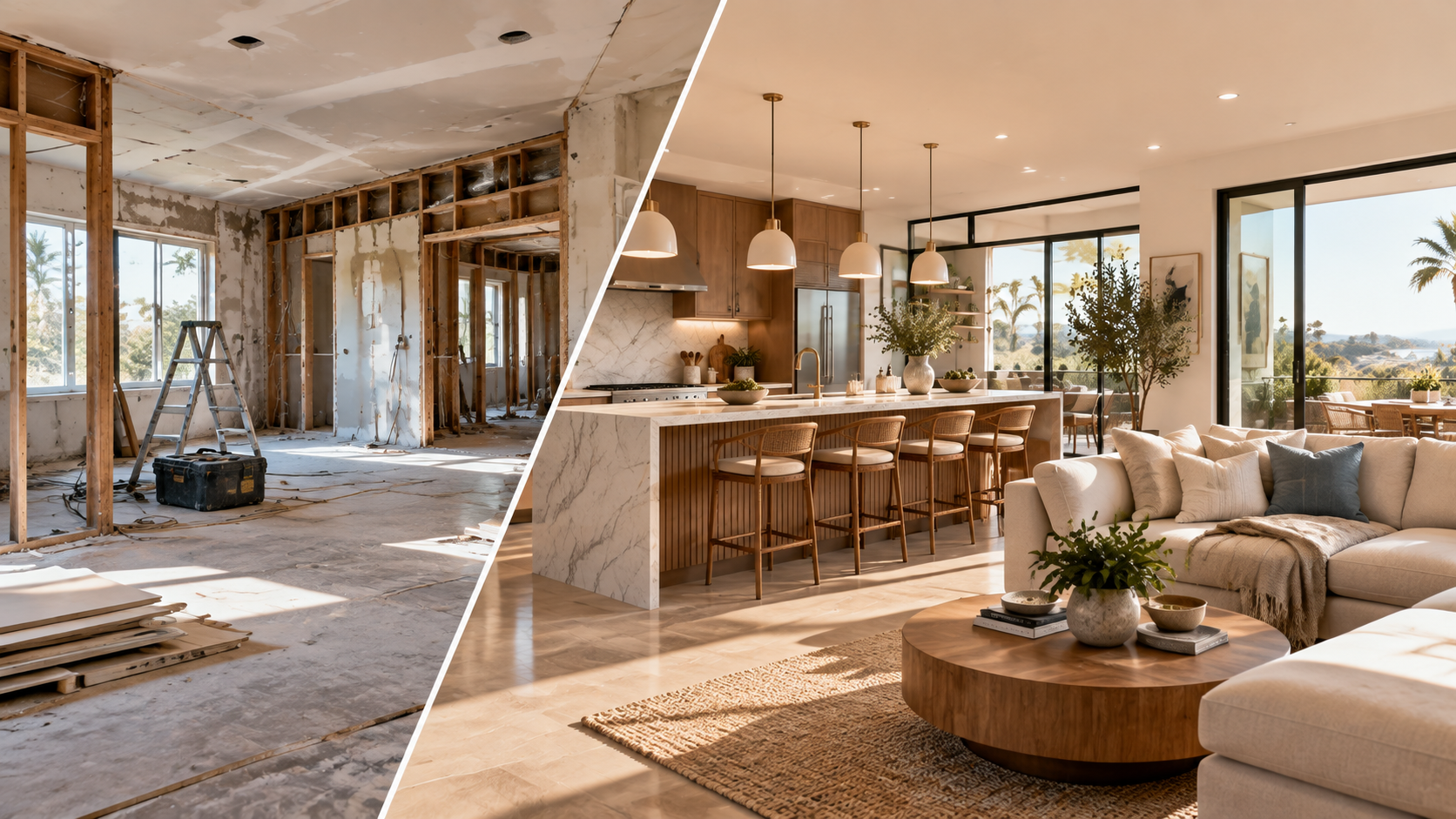
The average cost to renovate a home depends mostly on three things: the size of the home, the scope of the work, and local labor and permitting conditions. Nationally, whole-home remodels typically land between about $19,000 and $88,000, but a full gut renovation can run $130 to $200 per square foot, and California projects tend to cost more than the national figure. For example, a midrange major kitchen remodel averages about $82,800 nationally and about $97,700 in San Francisco, according to the 2025 Cost vs. Value Report.
At Jean-Prescott Studio, we have spent 10 years designing and permitting remodels, ADUs, and commercial spaces across California. This guide explains how renovation costs are actually built, with sourced numbers, so you can set a realistic budget before you talk to a single contractor.
How Much Does It Cost to Renovate a Home? The Short Answer
Renovation cost is the sum of design, permits, materials, labor, and a contingency reserve, and each scales with the scope of your project. The most widely cited national range for a whole-home remodel is roughly $19,000 to $88,000, with high-end projects exceeding $200,000. Costs per square foot for whole-house work run from about $15 for a cosmetic refresh to $150 or more for premium work with structural changes, and cost estimators disagree on the mid-range, so treat any single number as a starting point, not a quote.
Why California Renovation Budgets Run Higher
Two things push California budgets above the national figures: higher labor and material costs in major metro areas, and more demanding permit and code requirements. In the 2025 Cost vs. Value Report, the same project cost about 4% to 7% more in Los Angeles than the national average, and about 12% to 23% more in San Francisco.
The most reliable way to get a number for your own home is a project-specific estimate based on your plans, which is why we offer a free consultation before any commitment.
Average Cost by Scope of Work
Where your project sits on this spectrum is the biggest driver of cost. The ranges below combine national data with California figures from the Cost vs. Value Report.
| Scope | What it usually includes | Typical cost range |
|---|---|---|
| Cosmetic update | Paint, flooring, fixtures, minor finishes; no walls moved | About $15 per sq ft, or roughly $30,000 for a 2,000 sq ft home |
| Partial remodel | One or two rooms, such as a kitchen and a bathroom | Midrange minor kitchen about $28,500 and midrange bath about $26,100 nationally; about $29,800 and $27,100 in Los Angeles; about $31,800 and $32,200 in San Francisco |
| Full home remodel | Most rooms updated, some layout changes, systems upgraded | About $60 to $130 per sq ft for mid-range work, or roughly $120,000 to $260,000 for a 2,000 sq ft home |
| Gut and remodel | Interior stripped to the framing and rebuilt | About $130 to $200 per sq ft, or roughly $260,000 to $400,000 for a 2,000 sq ft home |
Larger single-room projects climb quickly. A midrange major kitchen remodel averages about $82,800 nationally, $86,200 in Los Angeles, and $97,700 in San Francisco. A midrange bathroom addition averages about $60,600 nationally and $63,600 in Los Angeles.
Home Renovation Cost Per Square Foot: How It Works (and When It Misleads)
Cost per square foot is the total project cost divided by the home’s square footage. It is useful for comparing quotes, but it can mislead in two ways:
Small, equipment-heavy rooms cost far more per square foot
Kitchens and bathrooms can run $75 to $250 per square foot, versus $15 to $60 for a whole-house average, because plumbing, electrical, cabinetry, and fixtures are packed into a small area.
It hides what is included
One quote may include design and permits while another does not, which makes two “per square foot” prices impossible to compare directly.
Use per-square-foot figures to sanity-check a bid, not to build your budget from scratch.
Cost to Gut and Remodel a House
A gut remodel removes interior walls and finishes and typically replaces the kitchen, bathrooms, electrical, plumbing, and HVAC, leaving only the structural frame. One national cost guide puts gut renovations at $130 to $200 per square foot, which works out to roughly $260,000 to $400,000 for a 2,000 square foot home, and notes that the work commonly takes 4 to 12 months.
That cost per square foot is higher than a cosmetic or partial remodel because almost every trade is involved. In exchange, you can fix layout problems, update outdated systems, and meet current energy code in one pass. Gut remodels almost always require full permit drawings, and often structural engineering, which is where early design planning pays off. Because this figure comes from a national guide and California labor runs above the national average, treat it as a floor for California planning, not a ceiling.
What Drives Renovation Costs Up or Down in California
- Permits and plan review. Each California city and county sets its own permit fees, review times, and required documents. Fees are typically calculated from the project’s valuation, and errors or resubmissions add cost and delay.
- Structural changes. Removing or moving load-bearing walls requires engineering and inspections.
- Systems upgrades. Older electrical panels, plumbing, and HVAC often need updating to meet current code once walls are opened.
- Metro-area labor and material costs. The Cost vs. Value Report shows San Francisco running about 12% to 23% above national averages on the same projects, and Los Angeles about 4% to 7% above.
- Design complexity and finish level. Upscale finishes change the total dramatically: a major kitchen remodel averages about $82,800 at midrange and about $164,100 upscale nationally.
- Site and access. Hillside lots, tight access, and older homes with hidden conditions raise costs.
Hidden Costs Most Homeowners Forget
Budgets usually fail on the items that were never in them:
- Architectural and design fees. One widely cited guide reports architects charge 5% to 20% of project cost, with an average of 8% to 15%, and principal architects bill about $150 to $250 per hour. Fee structures vary by firm and scope.
- Permit and plan-check fees, set by your local jurisdiction
- Structural, energy, or soils engineering reports
- Temporary housing or storage during construction
- Unforeseen conditions behind walls, such as outdated wiring, water damage, or pest damage
- A contingency reserve for changes and surprises
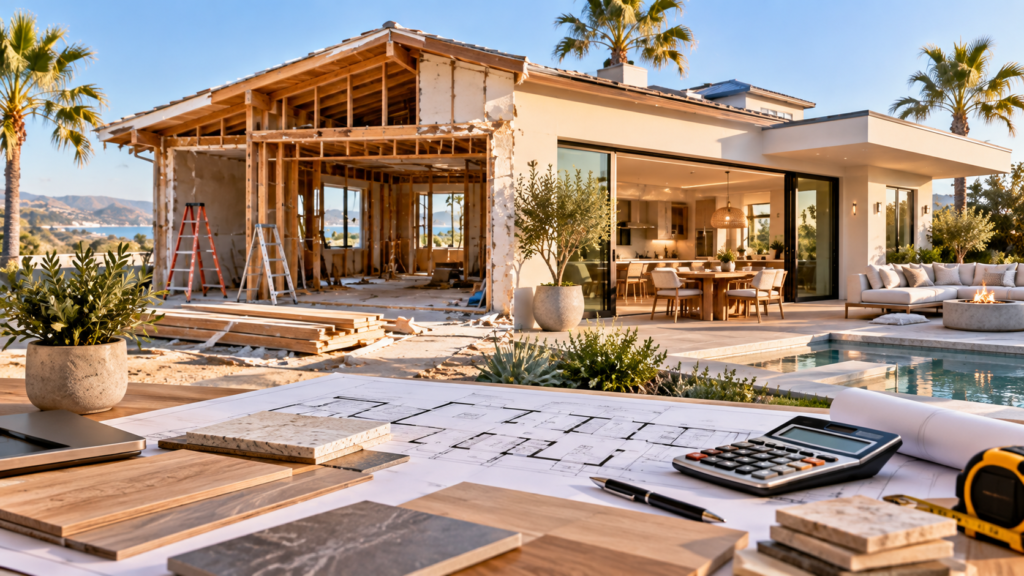
How to Build a Realistic Renovation Budget
- Define your scope first. Decide which rooms and systems are in and out before asking for prices.
- Get a design and plan set. Contractors can only give accurate bids against drawings.
- Add soft costs. Include design, permits, and engineering, not just construction.
- Hold a contingency of 10% to 20%. Cost guides consistently recommend padding estimates by this range, and leaning toward the higher end for older homes. On a $200,000 renovation, that is $20,000 to $40,000 set aside.
- Compare bids on equal terms. Make sure each includes the same scope, materials, and exclusions.
How Design and Permit Planning Reduces Cost Overruns
The most expensive changes happen after construction starts. Seeing the space in 3D renderings before demolition lets you catch layout and finish decisions while changes still cost nothing. Having permit drawings correct the first time avoids resubmission delays. This is why Jean-Prescott Studio handles design, 3D rendering, and permit processing as one turnkey service: fewer handoffs, fewer surprises, and a budget you can actually hold.
Is It Worth It? Renovation Cost vs. Property Value
Not every dollar spent returns a dollar of value. In the 2025 Cost vs. Value Report, a midrange minor kitchen remodel recouped about 127% of its cost at resale in Los Angeles, a midrange bath remodel about 90%, a midrange major kitchen about 57%, and an accessory dwelling unit about 40%. In San Francisco, those figures were about 112%, 74%, 49%, and 34%. Resale value is only part of an ADU’s return, since rental income and flexible use add value that the resale figure does not capture.
Renovations also affect your taxes: capital improvements generally increase your cost basis, and rental and home-office work follows different rules. For details, read our guide on which home renovations are tax deductible, and confirm specifics with a licensed tax professional.
Frequently Asked Questions
What is the average cost to renovate a home?
The average cost to renovate a whole home nationally falls between about $19,000 and $88,000, with high-end projects exceeding $200,000. Cost varies by scope, size, and location, and California projects tend to run above national figures. A project-specific estimate is more accurate than any average.
What is the average cost to remodel a house per square foot?
Whole-house remodels average roughly $15 to $60 per square foot in lower-cost estimates, while mid-range to premium work is commonly cited at $60 to $150 per square foot or more. Kitchens and bathrooms cost more per square foot, about $75 to $250, because of plumbing, electrical, and cabinetry.
How much does it cost to gut and remodel a house?
A gut remodel typically costs about $130 to $200 per square foot, or roughly $260,000 to $400,000 for a 2,000 square foot home, and often takes 4 to 12 months. It usually requires full permit drawings and sometimes structural engineering, and California costs can run higher.
How much should I set aside for unexpected renovation costs?
Most cost guides recommend a contingency of 10% to 20% of the total budget, leaning higher for older homes. On a $200,000 renovation, that means $20,000 to $40,000 in reserve.
Do I need a permit to renovate my home in California?
Most structural, electrical, plumbing, and layout changes require permits from your local building department. Purely cosmetic work often does not, but requirements and fees vary by city, so confirm with your jurisdiction or your design team.
Plan Your Renovation Budget With Confidence
A good budget starts with a clear plan. Whether you are updating a single room, remodeling a whole house, or adding an ADU, getting design and permit planning right from the start is the best protection against cost overruns.
Ready to Plan Your Renovation Budget?
Review your project scope, permit feasibility, and 3D design options directly with Jeannice Carrillo at Jean-Prescott Studio.